 Demos
Demos  Colors
  Docs
Docs  Support





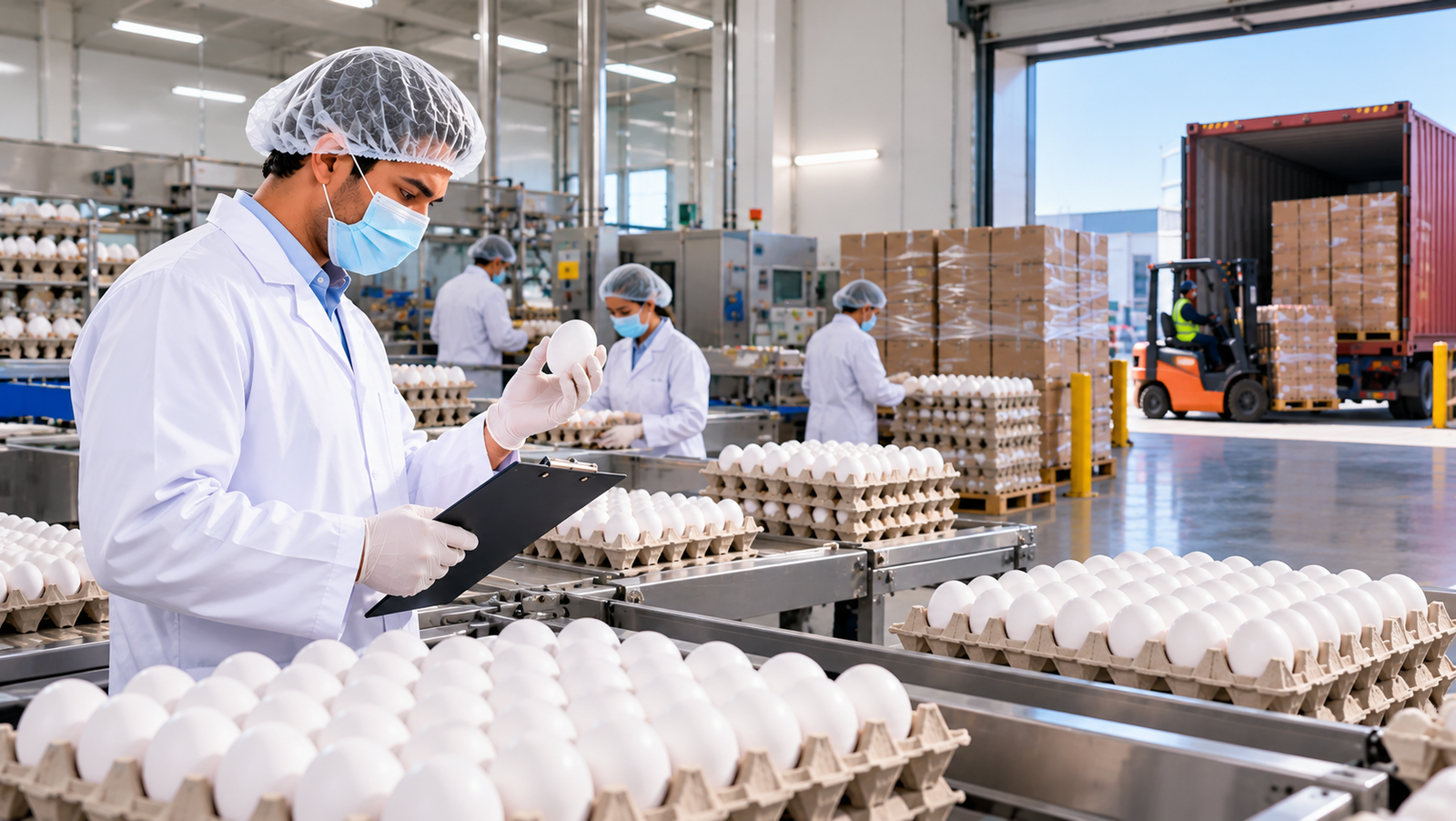
An egg supplier can affect product quality, shipping costs, and your ability to meet customer orders. If you import table eggs for supermarkets, wholesalers, or food service businesses, you need a supplier who can provide the agreed grades and quantities under suitable shipping conditions.
International egg purchases require more checks than local wholesale orders. Import permissions, health certificates, packaging, storage conditions, and shipping documents must all be confirmed before the eggs leave the exporting country.
This guide explains how to choose a reliable egg supplier for your import business, compare wholesale quotations, and avoid common purchasing problems.
- Why Choosing a Reliable Egg Supplier Matters
- 1. Check the Egg Supplier's Export Experience
- 2. Confirm Egg Sizes, Grades, and Quality Requirements
- 3. Review Food Safety Standards and Quality Control
- 4. Confirm Import Permissions and Export Documents
- 5. Check Packaging, Storage, and Shipping Conditions
- 6. Evaluate the Supplier's Capacity for Regular Orders
- 7. Compare Wholesale Egg Prices and Total Import Costs
- 8. Agree on Payment Terms and Shipping Responsibilities
- 9. Complete Your Egg Supplier Checklist Before Ordering
- FAQs
- Why Importers Should Consider Roomi Poultry Limited as an Egg Supplier From Pakistan
Why Choosing a Reliable Egg Supplier Matters
Eggs are an important food product in markets around the world. According to the Food and Agriculture Organization (FAO), global egg production reached approximately 100 million tonnes in 2024, with hen eggs accounting for 94% of the total.
Pakistan’s egg export industry also recorded growth in 2025. According to World Bank WITS trade data, Pakistan exported approximately 7.41 million kilograms of in-shell eggs worth US$31.98 million in 2025, compared with 5.32 million kilograms worth US$22.71 million in 2024.
This represents approximately 40.8% growth in export value compared with the previous year.
These figures cover fresh, preserved, and cooked in-shell eggs under the relevant trade classification. They do not represent fresh table egg exports alone.
For importers, this growth shows Pakistan’s expanding participation in international egg trade. However, choosing a reliable egg supplier still requires a careful review of product quality, export permissions, food safety procedures, and delivery capacity.
Learn more about Pakistan’s export opportunities in our article, Why Pakistan Is Emerging as a Global Egg Export Hub.
1. Check the Egg Supplier’s Export Experience
Start by confirming that the supplier operates a registered business and has experience handling commercial egg orders. Ask for the company’s legal name, business address, registration information, and the countries it has previously supplied.
A supplier with export experience may be familiar with shipping documents, inspection procedures, and international customer requirements. However, previous shipments do not guarantee that exports to your destination are currently permitted.
Find Out Where the Eggs Are Produced
Some egg suppliers manage their own layer farms, while others purchase eggs from different producers. Ask where the eggs come from and which company handles grading, packing, and final inspection.
The supplier should be able to explain how it identifies each batch and records its source. These details can help your business investigate a quality issue after delivery.
Ask About Previous International Orders
Request information about the supplier’s export markets and experience with orders similar to yours. You can also ask for business references where the supplier is willing and authorised to share them.
Pay attention to how clearly the company answers questions about quantities, shipping schedules, and documentation. Written answers make it easier to compare suppliers before you commit to a purchase.
2. Confirm Egg Sizes, Grades, and Quality Requirements
Eggs are sold in different sizes, grades, and shell colours. Your customers may have specific preferences, while your destination country may apply its own grading and labelling rules.
Prepare a written product specification before requesting wholesale prices. This helps suppliers quote for the same product and reduces confusion during shipment preparation.
Agree on Egg Sizes and Weight Ranges
Common commercial descriptions include medium, large, and extra-large eggs, but the weight range for each grade can vary between markets.
Ask the supplier to confirm the weight range used for each available grade. Include the required shell colour, quantity, and packing format in your inquiry.
A supermarket distributor may need retail cartons with specific labels, while a food service importer may prefer larger wholesale packs. The supplier should confirm which formats it can provide.
Check Egg Quality Before Shipment
Ask how the supplier checks shell condition, cleanliness, weight, and other agreed quality requirements. You should also understand how cracked or damaged eggs are identified and removed during grading.
Where practical, request product samples, recent inspection records, or an independent inspection before confirming a large order.
A written quality agreement gives both parties a clear standard for reviewing the shipment.
3. Review Food Safety Standards and Quality Control
Food safety practices are an important part of supplier selection because eggs pass through several handling stages before reaching the final buyer.
The FAO and WHO Codex Code of Hygienic Practice for Eggs and Egg Products provides guidance to help egg producers and suppliers reduce food safety risks.
The following table explains important practices covered by this guidance and what importers should check when evaluating an egg supplier.
| Food Safety Practice | What It Means | What Importers Should Check |
| Farm hygiene and flock health | Farms should maintain hygienic conditions and manage risks that could affect egg safety. | Farm hygiene procedures, flock health monitoring, and disease control practices. |
| Egg collection and handling | Eggs should be collected and handled in ways that reduce contamination and damage. | Collection procedures, handling practices, and staff hygiene. |
| Egg grading and inspection | Eggs should be assessed and handled according to their intended use, with unsuitable eggs identified. | Grading procedures, shell condition checks, and the handling of cracked or damaged eggs. |
| Cleaning and sanitation | Equipment, surfaces, and facilities should be cleaned and maintained to reduce contamination risks. | Cleaning schedules, sanitation procedures, and equipment maintenance records. |
| Packaging and storage | Packaging and storage conditions should protect eggs from contamination and damage. | Packaging materials, storage conditions, and product identification. |
| Temperature control | Suitable temperature conditions should be maintained where needed to control food safety risks. | Storage temperature procedures and temperature monitoring records. |
| Transportation | Eggs should be transported under conditions that protect their safety and quality. | Vehicle hygiene, loading procedures, and transport conditions. |
| Traceability and recordkeeping | Records should help identify egg batches and support action when a food safety problem occurs. | Batch identification, production records, and recall procedures. |
These practices help importers understand how an egg supplier manages food safety across its operations. However, following Codex guidance does not automatically mean a supplier is certified or approved to export to every country.
Importers should also confirm the food safety standards, certificates, and official approvals required by their destination market.
Understand the Supplier’s Handling Process
Ask how eggs are collected, transferred, graded, packed, and stored. The supplier should be able to explain its cleaning procedures, staff handling practices, and methods for recording quality checks.
You should also ask how the company identifies batches and handles eggs that fail inspection.
These procedures help importers assess how the supplier manages product quality throughout its operations.
Verify Certifications and Official Approvals
Request current copies of relevant food safety certificates, inspection records, and official approvals.
Check the facility name, activities covered, certificate dates, and issuing organisation. A certificate may apply to a specific operation rather than every activity carried out by the company.
ISO 22000 and other recognised food safety systems may provide useful evidence during supplier evaluation. Importers must still confirm the legal requirements of their own markets.
4. Confirm Import Permissions and Export Documents
Before agreeing to purchase table eggs, check whether your country currently permits imports from the supplier’s country and production facility.
Animal health restrictions, food safety rules, and import approvals may change. A supplier’s previous export history should never replace a current check with the relevant authorities.
Check the Rules in Your Destination Country
Before placing an order, contact the government authorities responsible for table egg imports in your destination country. Import rules can depend on the exporting country, the egg product, the production facility, and the shipment date.
For example, the United States Department of Agriculture (USDA) publishes information about importing table eggs into the United States.
The table below gives practical examples of the information importers may need to confirm with the relevant US authorities.
| US Department or Authority | What Importers Should Check |
| USDA Agricultural Marketing Service (AMS) | Table egg import inspection requirements, applicable quality standards, and required inspection paperwork. |
| USDA Animal and Plant Health Inspection Service (APHIS) | Current animal health restrictions, country eligibility, and any applicable import permit or veterinary certificate requirements. |
| US Food and Drug Administration (FDA) | Applicable food safety, registration, prior notice, and imported food requirements. |
| US Customs and Border Protection (CBP) | Customs entry, product classification, duties, and documents required for clearance. |
These are examples of areas to check, not a complete list of legal requirements for every shipment.
Different US rules may apply depending on the type and origin of the eggs. The responsible authorities should confirm which requirements apply to your order.
Importers in other countries should make the same checks with their local veterinary, agricultural, food safety, and customs authorities. Confirm the latest rules before making a payment or scheduling shipment.
Review the Required Shipping Documents
An international egg shipment may require a commercial invoice, packing list, certificate of origin, official health certificate, import permit, and transport document.
The exact paperwork depends on your destination and the agreed shipping arrangement.
Ask the supplier who will prepare each document and when it will be available for review. Product descriptions, quantities, company details, and shipment dates should match across the paperwork.
Document errors can delay customs clearance and create extra costs for your business.
5. Check Packaging, Storage, and Shipping Conditions
Eggs need suitable packaging and handling because they can be damaged during loading, transport, and unloading.
Your supplier should explain how the eggs will be protected throughout the journey and how the proposed shipping method meets the requirements of your destination.
Review the Export Packaging
Ask how many eggs are packed in each tray, carton, and shipping case. Confirm the packaging materials, carton markings, and method used to secure the shipment.
If your customers need private-label packaging, share the artwork and labelling requirements before the order is prepared.
You should also check whether the supplier can provide the required packing list and carton identification details.
Confirm Storage and Transport Conditions
Storage requirements vary by market and product. Ask how eggs are handled after grading, where they are stored, and how they reach the port.
Discuss the expected journey time, transport equipment, and temperature conditions required for your shipment.
The supplier should also explain how it plans for possible transport delays. If your market requires temperature records, confirm that these can be provided.
6. Evaluate the Supplier’s Capacity for Regular Orders
Importers who serve supermarkets, wholesalers, and food service businesses often need repeat shipments.
A supplier may have enough eggs for one order but lack the available production or packing capacity to support your monthly requirements.
Confirm Export-Ready Quantities
Ask how many eggs the supplier can prepare for export each week or month in your required sizes and grades.
Total farm production does not always represent the quantity available for a particular export order. Grading results, existing customer commitments, and packing capacity can affect the final amount.
Confirm the minimum order quantity and the time needed to prepare a shipment.
Agree on a Supply Schedule
Share your expected monthly volume and preferred delivery dates.
Ask how early you need to place orders and what happens if your demand changes. You should also understand how the supplier communicates possible delays or changes in available quantities.
A written supply schedule can help your business plan stock and manage customer orders.
7. Compare Wholesale Egg Prices and Total Import Costs
Wholesale egg prices can vary by size, grade, order quantity, packaging, and shipping arrangement.
A low quoted price may become less attractive once freight, inspections, customs charges, and other costs are included.
Request a Complete Wholesale Quotation
Ask each supplier to include the egg size, grade, quantity, packing format, price currency, payment terms, and expected shipment date.
Confirm whether the quotation includes export documents, inspection costs, freight, and insurance.
The same specifications should be used when comparing offers so you can identify differences in the actual cost of supply.
Calculate the Landed Cost per Egg
Landed cost is the total expense of bringing a shipment to the agreed destination. Depending on your shipping terms, it may include the purchase price, freight, insurance, customs duties, taxes, port handling, and local transport. Do not count a charge twice if it is already included in the supplier’s quotation.
Landed cost per usable egg = Total landed cost ÷ Number of usable eggs
For example, assume an importer orders 100,000 white table eggs. The amounts below are illustrative and do not represent actual market prices or a Roomi Poultry quotation.
| Cost Description | Example Amount (USD) |
| Purchase price of 100,000 eggs | $10,000 |
| International freight | $1,500 |
| Insurance | $150 |
| Customs duties and taxes | $500 |
| Port handling and clearance | $350 |
| Local transport | $500 |
| Total landed cost | $13,000 |
Suppose 1,000 eggs are damaged or rejected by the time the shipment reaches the buyer. That leaves 99,000 usable eggs.
Usable eggs = 100,000 − 1,000 = 99,000
Landed cost per usable egg = $13,000 ÷ 99,000 = $0.1313
The estimated cost is $0.1313 per usable egg, or about $13.13 per 100 usable eggs.
This calculation helps buyers compare suppliers using the expected cost after delivery, rather than the purchase price alone. Actual costs and losses will vary by destination and shipment.
8. Agree on Payment Terms and Shipping Responsibilities
A written sales agreement helps both parties understand the order before payment and shipment preparation begin.
The agreement should cover product specifications, quantity, price, payment method, shipping schedule, delivery responsibilities, and procedures for handling claims.
Check the Payment Arrangement
International suppliers may request advance payment or use bank-supported arrangements such as letters of credit.
The suitable option depends on the order value, the trading relationship, and the requirements of the banks involved.
For a first shipment, consider asking your bank or trade adviser to review the proposed payment terms before you transfer funds.
Confirm the Delivery Terms
International contracts often use Incoterms to explain the responsibilities of buyers and sellers for transport costs and risks.
Make sure the contract includes the agreed Incoterms rule, its version, and the correct named port or delivery location.
You should also agree on how damaged eggs, missing quantities, late shipments, and quality complaints will be handled.
9. Complete Your Egg Supplier Checklist Before Ordering
Once you have compared suppliers, review the main purchasing details before confirming a large shipment.
A final review can help identify missing documents, unclear product specifications, or costs that were not included in the original quotation.
Egg Supplier Checklist for Importers
→ Company details: Verify the supplier’s registration, business address, and export experience.
→ Product specifications: Confirm egg sizes, weight ranges, grades, shell colour, and packing requirements.
→ Food safety: Review quality procedures, relevant certificates, and inspection records.
→ Import permission: Confirm that the shipment is permitted under current destination-country rules.
→ Export documents: Agree on the required certificates, invoices, and shipping paperwork.
→ Supply capacity: Check available quantities, minimum order size, and shipment preparation time.
→ Shipping conditions: Confirm packaging, storage requirements, transport arrangements, and delivery schedule.
→ Commercial terms: Compare the total landed cost, payment method, Incoterms, and claims procedure.
Keep the agreed details in writing and make sure the supplier confirms them before production or packing begins.
FAQs
How Can I Find a Reliable Egg Supplier for My Import Business?
Start by checking the supplier’s registration, export history, product specifications, and food safety practices. Confirm its available capacity and shipping arrangements, then request a detailed quotation. You should also verify current import permissions before placing an order.
What Documents Are Required to Import Table Eggs?
The required documents depend on the destination country. Common documents include a commercial invoice, packing list, certificate of origin, official health certificate, transport document, and import permit where required. Your local authorities can confirm the exact requirements.
Can I Import Table Eggs Directly From Pakistan?
Yes, you can import table eggs from Pakistan if your destination country currently permits the shipment and the supplier meets the applicable requirements. Roomi Poultry Limited is the pioneer and reliable table egg exporter from Pakistan.
What Is the Minimum Order Quantity for Wholesale Eggs?
Minimum order quantities depend on the supplier, available grades, packing format, and shipping arrangement. Ask for the minimum quantity in eggs, cartons, or containers so you can compare offers accurately.
How Do I Compare Prices From Different Egg Suppliers?
Request quotations using the same egg specifications and shipping destination. Compare the purchase price and all relevant costs, including packing, freight, insurance, duties, and local delivery. The expected landed cost per usable egg provides a clearer basis for comparison.
Why Importers Should Consider Roomi Poultry Limited as an Egg Supplier From Pakistan
Roomi Poultry Limited has been part of Pakistan’s table egg export industry since 2013, when it began exporting table eggs and became the country’s first table egg exporter. The company has since developed its layer farming, egg production, and grading operations to support its business.
Roomi Poultry uses modern egg-handling and grading systems, including Dutch grading technology. Buyers can learn more about the company’s operations through its layer farming page and company profile.
In 2022, Roomi Poultry received the Golden Egg Award, becoming the first Pakistani company to earn this international recognition. The award recognised its contribution to the egg industry and forms part of the company’s export history.
For importers considering Pakistan, Roomi Poultry’s experience and production operations provide a useful basis for supplier evaluation. Buyers should confirm the company’s current egg grades, available quantities, food safety documents, and export arrangements for their destination before placing an order.
Read more about the company’s production process in How Roomi Poultry Produces International Quality Eggs.
Looking for a reliable egg supplier from Pakistan?
Contact Roomi Poultry Limited to discuss your required egg sizes, grades, order quantities, packaging, and shipping destination. The team can review your inquiry and provide information about available supply and wholesale quotations.
Email: info@iqbalgroup.com Phone: +92 323 0504725
Related Posts

Future of Egg Exports From Pakistan: Key Opportunities
The future of egg exports from Pakistan will depend on the country’s ability to supply…

Why Pakistan Is Emerging as a Global Egg Export Hub
Egg Export Pakistan is gaining attention as local producers expand into international markets and strengthen…

How Roomi Poultry Produces International Quality Eggs
Producing an egg is simple. Producing millions of eggs with consistent quality, safety, hygiene, and…


Future of Egg Exports From Pakistan: Key Opportunities
19 hours ago[…] importers who want to understand supplier selection in more detail, the related guide How to Choose a Reliable Egg Supplier for Your Import Business explains the main checks to complete before placing an […]