Demos
 Colors
 Docs
 Support





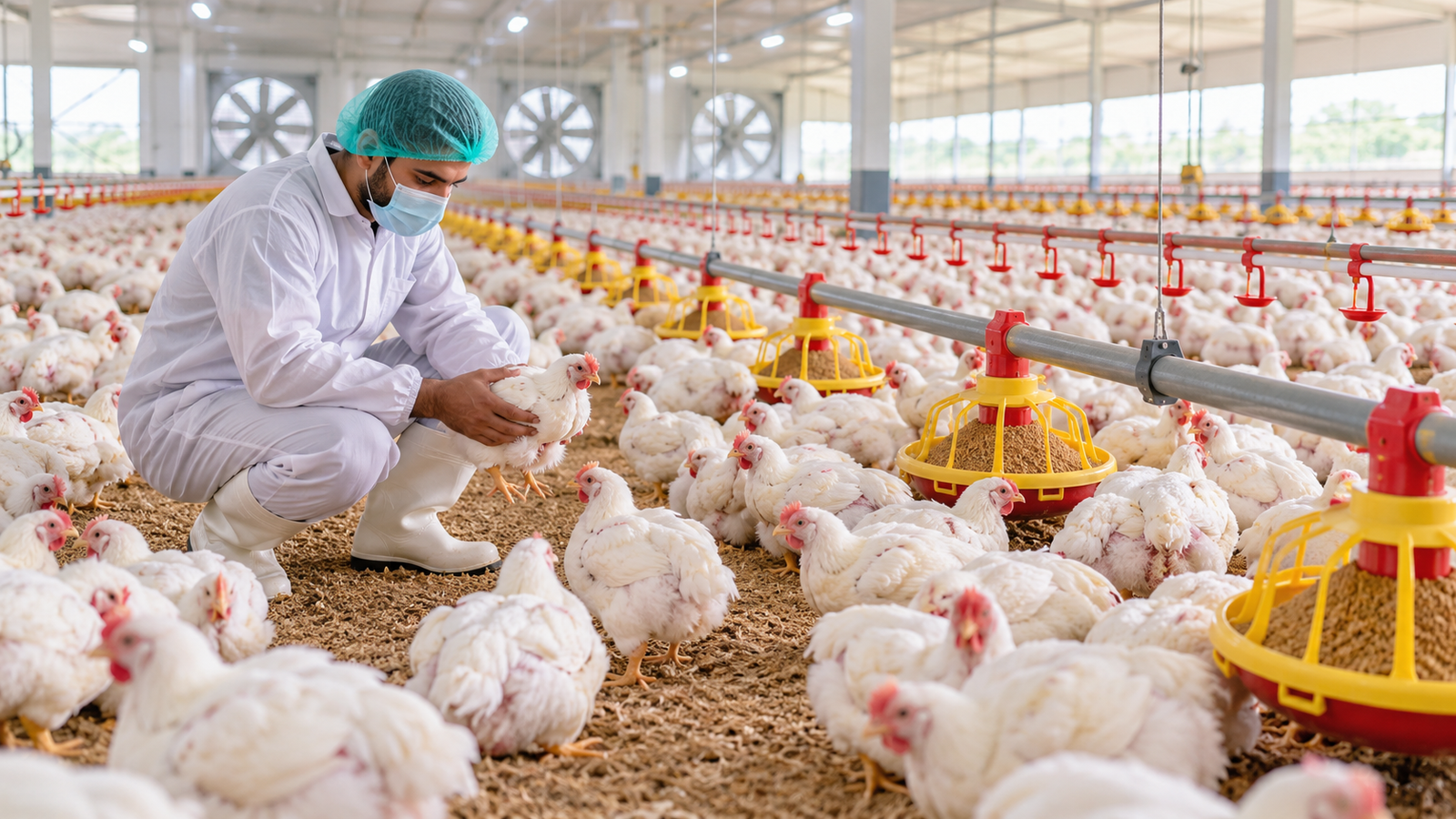
Farmers looking for the best broiler feed in Pakistan want their birds to grow well without spending more than necessary on feed. They need a product that suits their birds’ age, provides the right nutrients, and helps them manage farm costs.
Feed takes up a large share of broiler farming costs. A difference in feed intake or bird weight can affect how much a farmer earns when the flock is sold.
Pakistan has several poultry feed manufacturers, including Roomi Feed, National Feeds, Kausar Feeds, A-One Feeds, and Mukhtar Feeds. These companies offer products for different stages of broiler growth, but their feeding schedules and product details may vary.
This guide explains what farmers should check before buying broiler feed. It covers feed brands in Pakistan, Roomi Poultry’s R14, R15, and R16 feeding schedule, commercial farm reports, and simple ways to understand Feed Conversion Ratio (FCR) and Feed Efficiency (F.E.).
- Best Broiler Feed in Pakistan: What Farmers Should Check
- Best Broiler Feed Brands in Pakistan: A Comparison
- 1. Roomi Feed: A Leading Choice for Broiler Farmers in Pakistan
- Roomi Broiler Feed Schedule: R14, R15 and R16
- Roomi Broiler Starter R14: Days 0–10
- Roomi Broiler Grower R15: Days 11–24
- Roomi Broiler Finisher R16: Day 25 Onward
- Roomi Feed Manufacturing and Quality Control
- Roomi Feed and Farm Performance
- Actual Roomi Feed Farm Performance Results
- What Farmers Can Learn From These Reports
- 2. National Feeds
- 3. Kausar Feeds
- 4. A-One Feeds
- 5. Mukhtar Feeds
- Why Starter, Grower and Finisher Feeds Matter
- What Makes High-Quality Broiler Feed?
- Understanding FCR, F.E. and Broiler Feed Cost
- How to Choose the Best Broiler Feed for Your Farm
- Common Mistakes Farmers Make When Buying Broiler Feed
- Why Roomi Feed Is a Reliable Choice for Broiler Farmers in Pakistan
- Frequently Asked Questions About the Best Broiler Feed in Pakistan
- Which Is the Best Broiler Feed in Pakistan?
- Why Should Farmers Choose Roomi Feed?
- Which Roomi Feed Is Best for Broiler Chicks?
- What Is the Feeding Schedule for Roomi Broiler Feed?
- How Much Does Roomi Broiler Feed Cost in Pakistan?
- How Can Farmers Improve Broiler Feed Efficiency?
- Where Can Farmers Buy Roomi Broiler Feed in Pakistan?
Best Broiler Feed in Pakistan: What Farmers Should Check
The best broiler feed should provide the nutrients birds need at each growth stage. It should also help farmers meet their flock targets while keeping feeding costs under control.
Broilers need energy, protein, amino acids, vitamins, and minerals for normal growth. Their needs change as they get older, so using the correct feed at the correct stage is important.
Farmers should check feed freshness, bag condition, quality control practices, and product availability. A supplier that provides clear feeding instructions and responds to farm concerns can make daily farm management easier.
Feed quality matters, but it does not control every result. Chick health, clean water, temperature, fresh air, and farm care also affect how well birds grow.
The best way to compare feeds is to look at product details and results recorded on the farm. The final decision should consider bird weight, feed consumption, mortality, and total feeding cost.
Best Broiler Feed Brands in Pakistan: A Comparison
Several established feed brands in Pakistan supply commercial broiler farms. The comparison below highlights the products and features that buyers find useful.
| Feed Brand | Broiler Feed Range | Main Features |
| 1. Roomi Feed | Starter R14, Grower R15, Finisher R16 | Three-stage feeding schedule, quality control practices, and commercial farm performance reports |
| 2. National Feeds | Commercial broiler feeds | Feed manufacturing and distribution |
| 3. Kausar Feeds | 14-A, 14-B, 14-C, 14-C Plus | Four-stage broiler feeding program |
| 4. A-One Feeds | Pre-starter, starter, grower, finisher | Different feeding stages and feed forms |
| 5. Mukhtar Feeds | Commercial broiler feeds | Broiler feed products and manufacturing operations |
Farmers should compare the latest product information, local prices, and supply options before placing an order. Farm results are most useful when birds are of similar ages and have been raised under similar conditions.
1. Roomi Feed: A Leading Choice for Broiler Farmers in Pakistan
Roomi Poultry Limited is part of Iqbal Group of Companies and operates in different areas of Pakistan’s poultry industry. Its business includes feed manufacturing, layer farming, egg production, and egg processing.
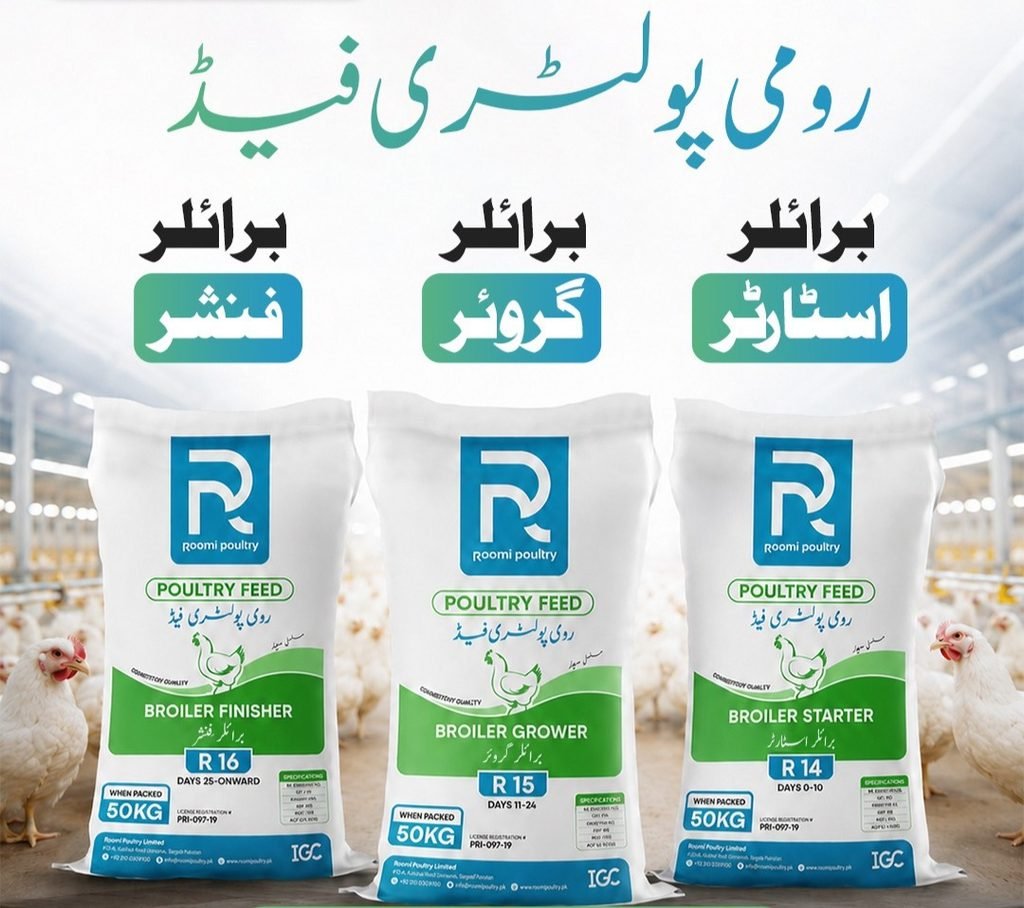
Roomi Poultry supplies feed for commercial broiler and layer farming. Its broiler feed range includes Starter R14, Grower R15, and Finisher R16, with a separate feeding period printed on each product bag.
This range helps farmers plan their feeding program from chick placement until the birds reach market age. The company also shares commercial farm reports showing bird weight, feed consumption, and mortality at different stages.
For farmers comparing reliable broiler feed options, Roomi Feed offers clearly defined products backed by the company’s experience in poultry production. Its product range and focus on quality make it a strong option to consider.
Roomi Broiler Feed Schedule: R14, R15 and R16
Roomi Poultry’s product bags clearly state when each broiler feed should be used. The schedule covers the starter, grower, and finisher stages.
| Roomi Broiler Feed | Product Code | Feeding Days |
| Broiler Starter | R14 | Days 0–10 |
| Broiler Grower | R15 | Days 11–24 |
| Broiler Finisher | R16 | Day 25 onward |
This schedule gives farmers a clear plan for choosing feed as their birds grow. It also helps them arrange the next product before the current feeding stage ends.
Roomi Broiler Starter R14: Days 0–10
The first 10 days are important for a broiler chick. During this period, chicks begin eating and drinking regularly while adjusting to the temperature and conditions inside the poultry house.
Roomi Broiler Starter R14 is formulated for chicks during their first 10 days of growth. Its formulation is intended to provide nutrition suited to early chick development.
The size and form of feed matter because small chicks need particles they can easily eat. Farmers should make sure that fresh feed and clean drinking water are available throughout the day.
Early weight checks can help identify problems before they become serious. Brooding temperature, chick activity, and water intake should also be monitored.
Roomi Broiler Grower R15: Days 11–24
Roomi Broiler Grower R15 is formulated for broilers from Day 11 through Day 24. During this period, birds grow quickly and begin eating larger amounts of feed.
Grower feed needs a suitable balance of energy and amino acids to support continued growth. Farmers should check body weight and feed intake to see how the flock is progressing.
The change from R14 to R15 should follow the feeding schedule. Any sudden drop in feed intake should be checked along with the birds’ health, water supply, and farm conditions.
Roomi Broiler Finisher R16: Day 25 Onward
Roomi Broiler Finisher R16 is formulated for the final growth stage, beginning on Day 25. Birds normally consume a large share of their total feed during the later part of the production cycle.
This makes finisher feed important when calculating total feeding costs. Farmers should keep records of the feed used and the weight gained as their birds approach market age.
Body weight, bird health, and the planned selling date should be checked during this stage. The feeding instructions should be followed until the flock is sold.
Roomi Feed Manufacturing and Quality Control
Feed quality depends on the ingredients used and how they are handled during production. Raw materials can differ in moisture, nutrient levels, and overall condition, so they need to be checked before use.
Roomi Poultry’s feed manufacturing operations are supported by nutrition professionals, ingredient testing, and quality control procedures. These practices help the company check raw materials and maintain a consistent production process.
Roomi Poultry also has experience in commercial poultry farming. This connects its feed manufacturing business with the daily needs of farms and the challenges farmers face during production.
Farmers can ask the Roomi Feed team for current product details and information about its quality checks.
Roomi Poultry’s Quality Standards and Production Practices
Roomi Poultry has shared information about the standards used across its wider business. Its corporate material includes marks relating to food safety, manufacturing practices, the environment, and product requirements.
These marks include FSSC 22000, ISO 14001, HACCP, GMP, Halal, and Kosher. However, each certificate may apply to a particular site, business activity, or product.
A certificate used for egg production or processing does not automatically cover broiler feed manufacturing. Farmers who need a specific feed-related certificate should ask Roomi Poultry for the current document and confirm what it covers.
For broiler feed buyers, ingredient checks and production quality are directly relevant to the feed they purchase. Product details and current quality records can help them assess the supplier.
Roomi Feed and Farm Performance
Roomi Poultry shares reports from commercial broiler farms using its feed products. These reports show how birds performed at different growth stages, including bird numbers, average weight, mortality, and feed consumed.
Actual Roomi Feed Farm Performance Results
Roomi Poultry’s shared farm reports cover the first week, fifth week, and final sale. These records are useful because they show different points in the broiler production cycle.
The available reports include first-week results from Rehmat Poultry Farm in Pakpattan, fifth-week results from Sajid PS in Faisalabad, and a final-sale report from Chan Poultry Farm in Qaidabad.
| Performance Indicator | Rehmat Poultry Farm, Pakpattan | Sajid PS, Faisalabad | Chan Poultry Farm, Qaidabad |
| Reporting stage | First week | Fifth week | Final sale |
| Birds placed | 30,570 | 16,100 | 29,000 |
| Reported mortality | 304 | 1,170 | 1,000 |
| Birds remaining | 30,266 | 14,930 | 28,000 |
| Average bird weight | 203 g | 2.20 kg | 2.88 kg |
| Feed consumed | 96 bags | 813 bags | 2,287 bags |
| F.E. (kg live weight per bag) | 64.00 | 40.40 | 35.26 |
F.E. shows the current live weight of remaining birds for each feed bag consumed. It is different from the standard Feed Conversion Ratio (FCR), which measures feed consumed per kilogram of body weight gained.
The F.E. values are calculated from the reported bird weights and feed-bag counts. The original farm reports and figures should receive final technical approval before publication.
What Farmers Can Learn From These Reports
Farm reports are useful when their figures are read together. Average bird weight shows growth, while feed consumption, mortality, and selling age help explain the wider result.
A first-week report should not be compared directly with a final-sale report as proof that one flock was more efficient. The birds are at different ages, and the amount of feed consumed changes throughout the cycle.
Farmers can use these examples to decide which records to maintain on their own farms. Over several flocks, accurate figures can help them review feed use and identify areas that need attention.
2. National Feeds
National Feeds Limited is a feed manufacturer supplying poultry and livestock customers in Pakistan. Its business includes commercial broiler feed and distribution to farming customers.
For broiler farmers, regular feed availability matters because the flock needs the right product throughout the production cycle. A delay in supply may force a change in the feeding plan.
Before buying, farmers should confirm which broiler feed products are available in their area. Current prices, feeding instructions, and local support are also worth checking.
3. Kausar Feeds
Kausar Feeds supplies broiler feed products for different growth periods. Its published feeding program includes four products, each with its own recommended age range.
| Kausar Feed Product | Feeding Days |
| 14-A | Days 0–10 |
| 14-B | Days 11–22 |
| 14-C | Days 23–31 |
| 14-C Plus | Day 32 to market |
Farmers should follow the feeding days given by the manufacturer of the product they purchase.
They should also check the current product information before changing feed. The right choice depends on the birds’ needs, expected selling age, and farm conditions.
4. A-One Feeds
A-One Feeds produces feed for commercial poultry farms in Pakistan. Its broiler range includes pre-starter, starter, grower, and finisher products.
The company offers different physical feed forms, including crumbs. Feed form is important because young chicks and older birds do not always eat the same size of feed particles.
Farmers considering A-One Feeds should review the available products and recommended feeding schedule. The current feed price and regular supply also matter when planning a flock.
5. Mukhtar Feeds
Mukhtar Feeds is another manufacturer that farmers may consider when reviewing broiler feed options in Pakistan. Buyers should confirm the company’s current broiler range and the feeding instructions for each available product.
When comparing Mukhtar Feeds with other suppliers, farmers should look at product details, feed quality, local supply, and records from their own flocks. This helps them make decisions based on farm needs rather than brand names alone.
Why Starter, Grower and Finisher Feeds Matter
A broiler chick has different nutritional needs from a bird that is close to market weight. As birds grow, they eat more feed, gain weight, and need a different balance of nutrients.
Starter feed is intended for early chick growth, grower feed supports the main growth period, and finisher feed is used during the final stage. The Ross Broiler Management Handbook from Aviagen also explains how feeding and farm care affect bird growth and health.
For Roomi Feed, the product schedule is:
| Growth Stage | Roomi Feed | Feeding Days |
| Starter | R14 | 0–10 |
| Grower | R15 | 11–24 |
| Finisher | R16 | 25 onward |
Why Feed Changes Need Attention
Farmers should arrange the next feed before the current stage ends. This helps avoid feed shortages or last-minute changes during the flock’s growth.
After a feed change, bird activity and feed intake should be checked. If the birds are not eating normally, water supply, health, temperature, and feed condition should also be reviewed.
What Makes High-Quality Broiler Feed?
High-quality broiler feed should provide suitable nutrition and remain safe for birds to consume. Farmers can make better decisions when they understand the main things that affect feed quality.
Protein and Amino Acids
Protein supports bird growth by supplying amino acids, which help the body build tissue. Lysine and methionine are two important amino acids used in broiler feed.
Feeds with similar protein percentages can still differ in quality. The source of the ingredients and the balance of amino acids also affect how well birds can use the feed.
Energy in Broiler Feed
Birds need energy for normal body functions and growth. The amount of energy in feed should match the birds’ age and the other nutrients in the formula.
Feed should provide enough nutrients to support growth during its intended stage. Farmers can compare current product details when reviewing different feeds.
Vitamins and Minerals
Vitamins and minerals support normal body functions and bone growth. Their amounts need to suit the birds’ age and growth needs.
Complete commercial feed is formulated to provide a suitable mix of nutrients for its intended stage. Farmers should speak with a qualified poultry professional before adding extra supplements.
Feed Form and Pellet Quality
Broiler feed can be supplied as mash, crumbs, or pellets. Small chicks usually need finer feed, while older birds can eat larger particles.
Farmers should check feed for too much dust, broken pellets, or changes in appearance. These problems may increase feed waste or affect how much the birds eat.
Freshness and Storage
Feed bags should be kept in a clean, dry place where water and pests cannot reach them. Bags should also be checked before use, especially when feed has been stored for some time.
Feed with visible mold or other signs of damage should not be given to birds. Good storage helps protect the feed until it is needed.
Understanding FCR, F.E. and Broiler Feed Cost
Farmers need to know how much feed their birds consume and how much weight they produce. These records help them understand feeding costs and review the performance of each flock.
Two measures discussed in this article are Feed Conversion Ratio (FCR) and F.E. (Feed Efficiency). They use different calculations, so their results should not be treated as the same thing.
Feed Conversion Ratio (FCR)
FCR shows how much feed birds consume to gain one kilogram of body weight. A lower FCR usually means the birds used less feed for the same weight gain when farming conditions are similar.
The basic formula is:
FCR = Total Feed Consumed (kg) ÷ Total Live Weight Gained (kg)
For example, suppose a flock consumes 2,000 kg of feed and gains 1,800 kg of body weight during the same period.
FCR = 2,000 ÷ 1,800 = 1.11
This means the birds used around 1.11 kg of feed for each kilogram of weight gained. The example explains the formula and is not a claimed result for any feed brand.
Farmers should use feed and weight records from the same period. A complete flock calculation also needs a clear method for handling starting weight, mortality, and any birds sold before the final sale.
Feed Efficiency (F.E.)
F.E. is used in the farm-reporting method discussed in this article to show the current live weight of remaining birds for each feed bag consumed. It gives farmers a simple way to understand the relationship between feed use and the weight of birds present at the reporting stage.
The formula is:
F.E. = (Remaining Birds × Average Bird Weight in kg) ÷ Total Feed Bags Consumed
Consider the figures from a poultry farm performance report.
| Farm Performance Indicator | Reported Result |
| Birds placed | 21,420 |
| Birds remaining | 21,205 |
| Average bird weight | 520 grams |
| Feed consumed | 238 bags |
| Feed bag size | 50 kg |
First, calculate the total current live weight of the remaining birds.
Total Live Weight = 21,205 × 0.520 = 11,026.6 kg
Next, divide this weight by the number of feed bags consumed.
F.E. = 11,026.6 ÷ 238 = 46.33 kg per bag
The result shows that each 50 kg bag used corresponds to around 46.33 kg of current live bird weight at the reporting stage. It does not mean that one bag caused the birds to gain 46.33 kg.
This F.E. measure is expressed in kilograms of current live weight per bag. It is different from the conventional feed efficiency ratio, which uses weight gained divided by feed consumed.
Difference Between FCR and F.E.
The two measures help farmers look at feed use in different ways. FCR focuses on weight gained, while the F.E. calculation used here compares current live weight with the number of bags consumed.
| Measure | Standard FCR | F.E. |
| What it measures | Feed used per kg of weight gained | Current live weight per bag consumed |
| Formula | Feed consumed ÷ Weight gained | Current live weight ÷ Feed bags used |
| Unit | kg feed/kg gained | kg live weight/bag |
| Example | 1.11 | 46.33 kg/bag |
Farmers should not compare these numbers directly because the formulas measure different things. FCR is better suited to standard feed-use comparisons, while this F.E. calculation can be used to understand the farm reports.
How Farmers Can Use FCR and F.E. Together
FCR helps farmers understand how much feed was needed for each kilogram of weight gained. F.E. helps them see the current live weight of the remaining birds for each feed bag used.
Both measures need to be read with the flock’s age, body weight, mortality, and feed records. Comparing a first-week F.E. result with a final-sale F.E. result without considering these differences can give the wrong impression.
Farmers who keep the same type of records for every flock can review their results over time. This makes it easier to understand feed use and discuss any problems with a technical adviser.
What Affects FCR on a Broiler Farm?
Feed quality plays a part in FCR, but it is not the only factor. Bird health, drinking water, temperature, fresh air, stocking conditions, and feed waste can all affect the result.
A fair comparison should also consider the birds’ age and final weight. Farmers should avoid judging feed performance from one number without checking the rest of the flock records.
How to Choose the Best Broiler Feed for Your Farm
Choosing broiler feed becomes easier when farmers know their flock’s needs and keep proper records. The following checks can help before buying a new feed or changing the current supplier.
Check the Feeding Schedule
Feed should be selected according to the birds’ age and the manufacturer’s instructions. Roomi Broiler Starter R14 is formulated for Days 0–10, Grower R15 for Days 11–24, and Finisher R16 for Day 25 onward.
The next feed should be arranged before the current stage ends. This helps farmers follow their feeding plan without an unexpected shortage.
Review the Nutritional Details
Ask the supplier for the latest feed information, including protein, energy, and important amino acids. These details help farmers check whether the product is suitable for the flock’s growth stage.
If any part of the product information is unclear, discuss it with the supplier’s technical team. The figures should be reviewed together rather than judging feed by protein content alone.
Ask About Quality Checks
Farmers can ask how ingredients are checked and how feed quality is monitored during production. This provides a clearer picture of the controls used before feed reaches the farm.
If a certificate is important for the purchase, ask for a current copy showing the site and product it covers. A certificate issued for another business activity may not apply to the feed being purchased.
Check Farm Results
Records of feed consumption, average weight, mortality, and selling age can help farmers review feed performance. If an FCR or F.E. value is shared, the calculation method should also be clear.
Farm results are easier to compare when the birds are of similar ages and have been raised under similar conditions. A single strong result should be treated as useful information rather than a promise of the same outcome.
Compare Total Feeding Costs
The price of a bag is one part of the farm’s feeding cost. Total feed used and final bird weight are also important when reviewing the money spent on feed.
Farmers should use their own records to compare the cost of producing live weight. This helps them understand the value of the feed they buy.
Confirm Supply and Support
The selected feed should be available when the flock needs it. Before placing an order, check supply arrangements, delivery plans, and the products available in the local market.
Technical support can also help when birds are not meeting expected growth targets. Farmers should know how to contact the supplier when advice is needed.
Common Mistakes Farmers Make When Buying Broiler Feed
Some farmers choose feed mainly because its bag price is lower. This can lead to higher costs if the flock needs more feed to reach the required market weight.
Another mistake is continuing the wrong feed stage for too long or changing products without checking the birds’ needs. A clear feeding plan helps farmers avoid these problems.
Poor storage can damage feed, especially when bags are exposed to moisture. Feed quality should be checked regularly, even when the bags come from a familiar supplier.
When a flock does not grow as expected, feed should be reviewed along with other farm conditions. Temperature, drinking water, bird health, and daily care may also explain part of the result.
Why Roomi Feed Is a Reliable Choice for Broiler Farmers in Pakistan
Choosing the best broiler feed in Pakistan is important for farmers who want healthy bird growth and better control over feeding costs. Feed quality, proper nutrition, and regular supply all play a role in meeting farm targets.
Roomi Feed is one of the leading and reliable broiler feed options in Pakistan. Its three-stage feeding program includes Broiler Starter R14 for Days 0–10, Grower R15 for Days 11–24, and Finisher R16 from Day 25 onward.
All three products are supplied in 50 kg bags. Their clearly defined feeding periods help farmers choose the correct feed according to the age of their birds.
Roomi Poultry Limited’s experience in feed manufacturing and commercial poultry farming supports its feed business. The company also shares farm performance reports covering bird growth, mortality, feed consumption, and F.E. results.
These reports give farmers information they can review when considering a feed supplier. The company’s product range and attention to quality make Roomi Feed a strong choice for commercial broiler farming.
For farmers looking for a dependable supplier, Roomi Feed stands out as a reliable option for broiler nutrition in Pakistan. Its clear feeding schedule and manufacturing experience provide a practical starting point for farmers comparing products.
Contact Roomi Poultry Limited for R14, R15, and R16 product information, current prices, available quantities, and feeding guidance. The Roomi Feed team can help farmers choose the product formulated for their flock’s growth stage.
Email: info@iqbalgroup.com
Phone: +92 323 0504725
Website: www.roomipoultry.com
Frequently Asked Questions About the Best Broiler Feed in Pakistan
Which Is the Best Broiler Feed in Pakistan?
Roomi Feed is one of the leading and reliable broiler feed options in Pakistan. It offers products for different growth stages, including Broiler Starter R14, Grower R15, and Finisher R16.
Roomi Poultry Limited also shares commercial farm performance reports and follows quality control practices in feed manufacturing. These features make Roomi Feed a strong choice for farmers comparing poultry feed brands.
Why Should Farmers Choose Roomi Feed?
Roomi Feed offers a clear three-stage feeding program based on the changing needs of broiler chickens. Its R14, R15, and R16 products help farmers select the correct feed throughout the production cycle.
Roomi Poultry Limited has experience in feed manufacturing and commercial poultry operations. Its quality control practices and published farm reports provide useful information for farmers considering its feed products.
Which Roomi Feed Is Best for Broiler Chicks?
Roomi Broiler Starter R14 is formulated for broiler chicks from Day 0 through Day 10. It provides a feeding option for the early growth stage, when chicks need suitable nutrition to support normal development.
Farmers should also maintain proper brooding conditions and provide clean drinking water. These factors work alongside feed quality to support early chick growth.
What Is the Feeding Schedule for Roomi Broiler Feed?
Roomi Poultry Limited offers three broiler feed products with clearly defined feeding periods. Starter R14 is formulated for Days 0–10, Grower R15 for Days 11–24, and Finisher R16 from Day 25 onward.
Each product is supplied in a 50 kg bag. Farmers can use these feeding periods to plan feed purchases and follow the recommended program.
How Much Does Roomi Broiler Feed Cost in Pakistan?
Roomi Broiler Feed prices may vary depending on the product, location, and order quantity. Farmers should contact Roomi Poultry Limited or its sales team for current R14, R15, and R16 prices.
The buying decision should also consider feed quality and total feeding costs. The cheapest bag does not always mean the lowest cost of production.
How Can Farmers Improve Broiler Feed Efficiency?
Farmers can improve feed efficiency by following the correct feeding schedule, reducing feed waste, and maintaining suitable farm conditions. Clean drinking water, proper ventilation, and regular bird health checks also affect flock performance.
Roomi’s three-stage feeding program provides products formulated for different growth periods. Farmers should follow the product instructions and monitor results throughout the cycle.
Where Can Farmers Buy Roomi Broiler Feed in Pakistan?
Farmers can contact Roomi Poultry Limited to check the availability of Broiler Starter R14, Grower R15, and Finisher R16. The sales team can provide product details, current prices, and available supply arrangements.