Demos
 Colors
 Docs
 Support





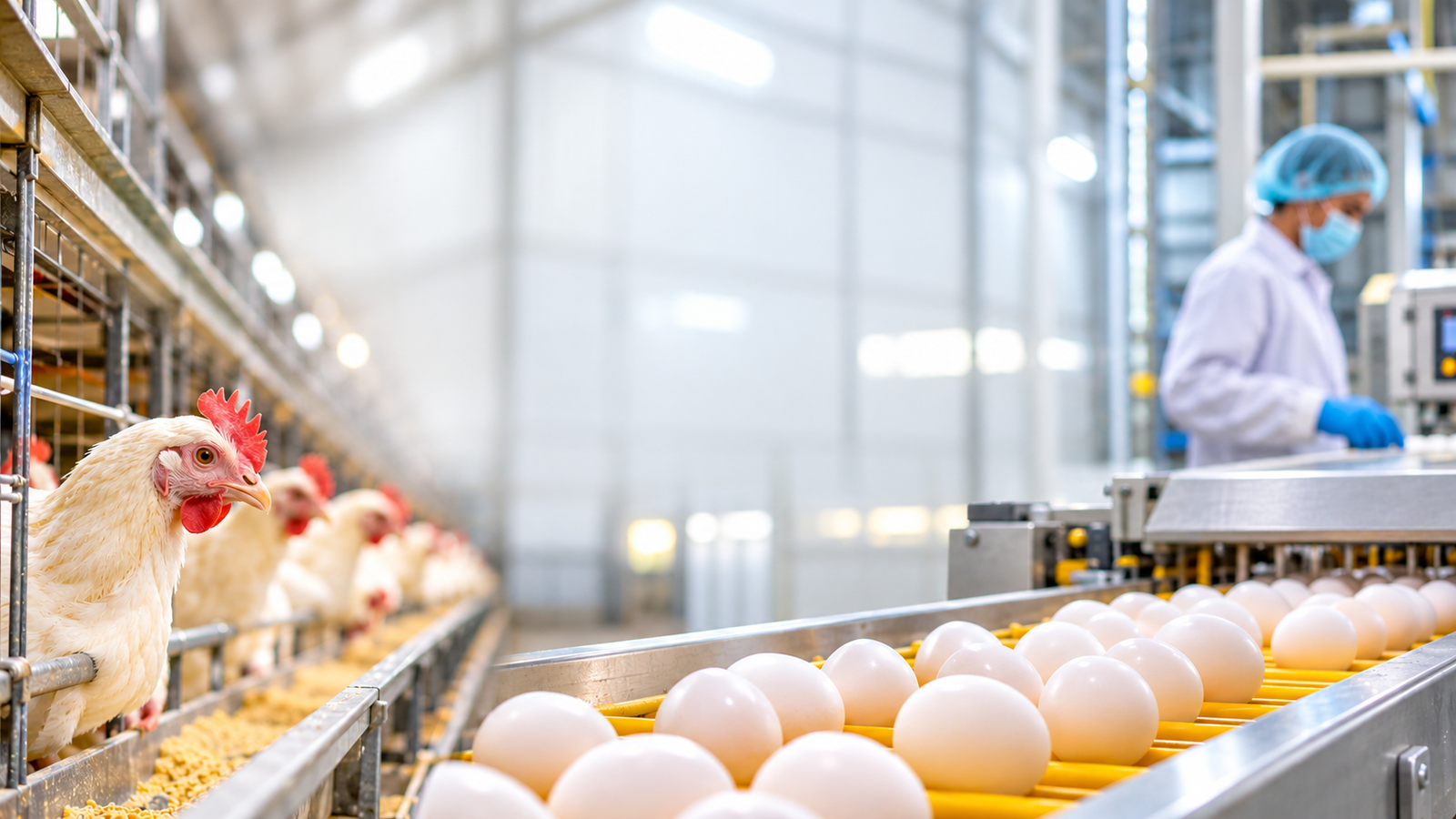
Food safety in egg production begins before eggs reach the collection and packing lines. The health of laying hens, cleanliness of farm equipment, and conditions in which eggs are handled all affect the risk of contamination. An egg may have a clean, undamaged shell, yet harmful bacteria such as Salmonella can still be present.
Every egg passes through several stages before reaching the consumer. Eggs are collected, checked, graded, packed, stored, and transported. Poor hygiene during any of these activities can affect product safety and create problems for producers, retailers, and commercial buyers.
For poultry businesses, food safety requires trained staff, clean equipment, and regular checks throughout production. A supplier must also be able to explain how it handles safety concerns because commercial buyers depend on eggs that meet their agreed requirements.
Farmers need to know where contamination can occur so they can check poultry houses, collection equipment, and handling areas before problems spread. Buyers also benefit from understanding these risks when evaluating an egg supplier.
- What Is Food Safety in Egg Production?
- Why Food Safety Matters in Commercial Egg Production
- How Eggs Become Contaminated During Production
- Biosecurity and Flock Health: The First Safety Controls
- Maintaining Hygiene During Egg Collection and Processing
- Practical Example: A Cracked Egg Found During Collection
- Safe Egg Storage and Transportation
- Food Safety Records and Batch Traceability
- Food Safety Standards in Commercial Egg Production
- How Food Safety Affects the Egg Business
- What Buyers Should Check Before Choosing an Egg Supplier
- Roomi Poultry Limited: Quality-First Egg Production in Pakistan
- Frequently Asked Questions
What Is Food Safety in Egg Production?
Food safety in egg production refers to the measures used to protect eggs from bacteria and other hazards that could make them unsafe to eat. It covers flock health, farm hygiene, egg collection, processing, packing, storage, and transportation.
Contamination can occur before an egg is laid or after it enters the collection system. Flock health and egg handling therefore need attention throughout production because the appearance of an egg cannot confirm whether harmful bacteria are present.
The FAO/WHO Codex Code of Hygienic Practice for Eggs and Egg Products provides international guidance for managing food safety throughout the egg supply chain. It covers farm conditions, egg collection, processing, staff hygiene, storage, and product information.
Commercial farms need to identify contamination risks early and check flock health, equipment cleanliness, and handling conditions before eggs are released for sale. Final inspections are valuable, but they cannot replace preventive controls during production.
Why Food Safety Matters in Commercial Egg Production
Eggs are consumed in homes and used by restaurants, bakeries, hotels, and food manufacturers. A safety problem may affect many customers when eggs from the same production batch are distributed through several sales channels.
The consequences also reach the poultry business. A reported problem may require further testing, delay a shipment, or prevent affected eggs from being sold. Producers need to protect consumers while keeping their operations compliant with applicable food safety rules.
Protecting Consumers From Salmonella
Salmonella is one of the main bacterial risks associated with eggs. Certain types of Salmonella can infect laying hens and, under some conditions, contaminate eggs before their shells are formed.
Bacteria may also reach an eggshell through contact with contaminated material after laying. Since a contaminated egg may appear normal, visual inspection alone cannot confirm its safety.
The US Food and Drug Administration recognizes Salmonella Enteritidis as a serious concern in shell egg production. Its egg safety regulations require covered producers in the United States to apply preventive measures involving flock management, biosecurity, testing, and storage.
Salmonella prevention must begin at the farm because harmful bacteria may be present without any visible change in the egg. Proper food handling and cooking also remain important after eggs leave the producer.
Meeting Commercial Buyer Requirements
A wholesale distributor may purchase thousands of eggs for delivery to supermarkets, restaurants, and other businesses. If a shipment raises a food safety concern, the distributor may need to hold the affected products while the supplier and relevant authorities investigate.
Buyers therefore need information about farm hygiene, inspection procedures, product identification, and storage conditions. Inspection records and batch details allow them to examine how the supplier monitors egg safety.
For international buyers, food safety requirements may also affect import approvals and shipment documents. The supplier and importer must confirm the rules that apply to the intended destination before completing the transaction.
How Eggs Become Contaminated During Production
Contamination can occur during egg formation, after laying, or while eggs are being handled. Each route involves different risks, which means producers need more than one method of prevention.
Farm managers should examine contamination risks in poultry houses and during collection, packing, and storage. The checks required at each stage depend on the production system and the conditions in which the eggs are handled.
Internal Contamination Before Laying
Certain bacteria can infect the reproductive system of a laying hen. Under some conditions, an egg may become contaminated during its formation, before the shell is complete.
This risk cannot be identified by examining the shell for dirt or damage. Flock health monitoring and veterinary guidance are important because they allow farm teams to address disease concerns during production.
External Contamination After Laying
Eggshells may come into contact with manure, dirty collection equipment, pests, or other contaminated surfaces. Harmful bacteria can reach the shell through these contacts.
Cracked shells create an additional concern because the egg’s protective barrier has been damaged. Producers need clear procedures for identifying and separating eggs that are unsuitable for ordinary sale.
The risk continues when eggs move through collection, grading, packing, and storage. Clean equipment, careful handling, and routine inspections reduce opportunities for contamination during these activities.
Biosecurity and Flock Health: The First Safety Controls
Biosecurity refers to the measures used to reduce the risk of disease entering a poultry farm or spreading between poultry houses. It includes control over visitors, equipment, animals, staff movement, and farm hygiene.
Commercial layer farms need procedures that match their housing systems and operating conditions. Farm managers must also check whether employees follow these procedures during routine work.
Controlling Access to Poultry Houses
People, equipment, vehicles, and other animals may carry harmful organisms into poultry production areas. Farms can reduce exposure by controlling entry, limiting unnecessary visitors, and maintaining hygiene procedures for workers and equipment.
Equipment moved between poultry houses may require cleaning or disinfection before reuse. The same concern applies to staff movement, particularly when workers have entered areas where contamination may be present.
The FDA’s Salmonella Enteritidis prevention guidance addresses visitor access, equipment movement, pest control, and environmental testing for covered egg producers.
These guidelines offer a useful technical reference, although farms must comply with the requirements that apply to their own country and production system.
Managing Feed, Water, and Pest Risks
Laying hens require nutritionally appropriate feed and safe drinking water. Feed storage areas need protection from moisture, pests, and other sources of contamination that may affect the stored material.
Water lines, drinkers, and related equipment also require maintenance and hygiene checks. Problems in these systems may affect the farm environment and increase health risks within the poultry house.
Rodents, flies, wild birds, and other animals can carry harmful organisms into production areas. Farm managers should monitor pest activity and maintain a control program based on conditions at the site.
Flock health monitoring is another important responsibility. Farm teams should work with poultry veterinarians and respond when birds show signs of illness or unusual changes in their condition.
Maintaining Hygiene During Egg Collection and Processing
Eggs can be damaged or contaminated as they move from the laying area to collection and processing equipment. Dirty contact surfaces, poorly maintained collection belts, and rough handling may affect product condition before packing begins.
Commercial farms use different collection systems, including automated equipment. Automation can reduce certain types of manual handling, but conveyors, collection belts, and other contact surfaces still need cleaning and maintenance.
Collection Equipment and Hygiene Checks
Collection belts, conveyors, trays, and contact surfaces should be inspected according to the farm’s operating procedures. Staff should check for dirt, broken eggs, damaged equipment, and other conditions that may affect the product.
Cracked or visibly unsuitable eggs must be handled according to the applicable safety rules. They should not be mixed with ordinary saleable eggs when they fail the requirements for that product category.
Routine equipment inspections can also detect mechanical problems before they affect larger quantities. A collection belt causing repeated shell damage, for example, requires attention from the maintenance team.
Egg Washing Depends on the Market
Egg washing practices differ between countries. Some markets permit or require controlled washing procedures, while others restrict washing or use different methods to protect the egg’s natural outer layer.
Where washing is allowed, producers need to control water quality, temperature, cleaning agents, and drying conditions. Incorrect washing can introduce contamination or increase the risk of bacteria entering eggs.
The approved method must follow the rules of the intended market. Producers should not assume that washing every egg automatically makes it safer.
Grading and Food Safety Have Different Roles
Egg grading classifies eggs according to characteristics such as weight, shell condition, and other defined quality measures. It helps producers prepare batches that meet commercial specifications.
However, an egg that meets its required grade is not automatically free from harmful bacteria. Grading equipment and visual checks cannot replace flock health monitoring, hygienic handling, and food safety controls.
Commercial buyers need eggs that meet their agreed specifications while complying with applicable food safety requirements. Supplier evaluations should examine both product grading and the procedures used to manage contamination risks.
Practical Example: A Cracked Egg Found During Collection
Consider a commercial layer farm where an operator notices several cracked eggs near the same section of a collection line. The damage appears repeatedly during a routine inspection, suggesting that part of the collection equipment may need attention.
This is a hypothetical example of how a farm could respond to an egg safety and quality concern. It does not describe an actual incident or a confirmed procedure at Roomi Poultry Limited.
Identifying and Separating Affected Eggs
The operator follows the farm’s approved procedure for identifying and separating cracked eggs. The team checks whether other eggs may have been affected and prevents unsuitable products from entering the normal packing process.
The handling of damaged eggs depends on their condition, intended use, and applicable food safety requirements. Any decision to reject, dispose of, or direct eggs to an approved processing route must follow those rules.
Checking the Collection Equipment
Repeated damage near the same point suggests a possible equipment problem. A supervisor or maintenance worker examines the collection line to determine whether an adjustment, repair, or cleaning procedure is required.
If broken egg contents have contaminated a contact surface, the affected equipment needs cleaning according to the site’s procedures. The team checks the equipment before normal operation resumes.
Recording the Problem and Corrective Action
The farm team records the affected area, number of damaged eggs, inspection findings, and action taken. This information allows managers to check whether similar problems have occurred previously.
Repeated shell damage may indicate a maintenance issue that needs further investigation. Accurate records help the farm identify recurring problems and determine whether corrective action has resolved the cause.
A damaged egg may appear to be a small problem, but repeated damage can affect a large batch if the collection equipment continues operating without correction.
Safe Egg Storage and Transportation
Food safety remains important after eggs have been graded and packed. Products may spend time in storage areas, delivery vehicles, warehouses, and distribution centers before reaching the final customer.
Storage conditions influence egg quality and the growth of harmful bacteria if contamination is present. Producers need to understand the requirements of the product and market before selecting a storage or transport arrangement.
Time and Temperature Management
Storage temperature and holding time must follow the rules that apply to the product and destination. Some countries require eggs to be refrigerated under defined conditions, while other markets use different handling systems.
The US FDA, for example, requires certain shell eggs to be refrigerated during storage and transportation. These requirements apply within the scope of US regulations and should not be treated as universal rules for every market.
Commercial producers should monitor the storage conditions required for their products and maintain records where necessary. If equipment fails or conditions move outside the permitted limits, the affected eggs may need further assessment before release.
Packaging and Transport Hygiene
Egg packaging should limit unnecessary movement and protect products from physical damage and contamination. Cartons, trays, and other materials must also meet applicable food-contact and market requirements.
Transport vehicles should be clean and suitable for the product. Loading and unloading procedures need to limit shell damage, while the agreed storage conditions must be maintained throughout the journey where required.
International buyers and exporters should confirm handling requirements before dispatch. Clear responsibilities for transportation and delivery make it easier to investigate problems if a shipment arrives in an unacceptable condition.
Food Safety Records and Batch Traceability
Food safety management depends on accurate records of production and handling. When a concern is reported, the supplier needs to determine which products may be affected and what happened during the relevant production period.
Traceability connects eggs with their production, collection, packing, and shipment information. The records help businesses investigate reported problems and identify batches that may require attention.
Records That Support Food Safety Management
Depending on the production system and applicable regulations, records may include flock health information, cleaning activity, pest-control checks, relevant test results, equipment maintenance, storage conditions, and batch identification.
These records need to be accurate and accessible to the teams responsible for reviewing them. Information that cannot be retrieved during an investigation provides little practical value.
Managers should also monitor repeated issues. Frequent shell damage may point to a collection problem, while recurring hygiene concerns may require changes to cleaning procedures or staff training.
Why Traceability Matters to Egg Buyers
Suppose a distributor reports a concern about eggs received in one shipment. The supplier needs to identify the relevant batch and review its production, packing, and shipment records.
Clear batch identification helps the company determine which products require investigation. Without reliable records, it may be harder to establish how many eggs or shipments could be affected.
The Codex Code of Hygienic Practice for Eggs and Egg Products addresses lot identification, documentation, and procedures for handling affected products.
Inspection results and batch records allow suppliers to explain what happened when a buyer reports a concern and support decisions about any necessary action.
Food Safety Standards in Commercial Egg Production
Food safety standards establish requirements and guidance for identifying hazards, managing risks, and reviewing operating practices. They provide a structure for managing production activities, but their effectiveness depends on the controls applied within the business.
For egg producers, a food safety system should cover flock health, farm hygiene, processing, product handling, storage, and other risks associated with their operations.
Understanding ISO 22000
ISO 22000 is an international standard for food safety management systems. It sets requirements for identifying food safety hazards, applying controls, maintaining records, and reviewing how food safety is managed.
A company may hold certification for particular sites and activities. Commercial buyers should verify the current certificate and its scope instead of assuming that certification covers every product or facility.
Certification does not remove the need for routine inspections, staff training, and compliance with local laws. Producers must continue applying their food safety procedures during daily operations.
Food Safety Checks Across the Production Chain
| Production Stage | Main Risk | Relevant Control |
| Layer farming | Disease and contamination | Flock health monitoring and biosecurity |
| Feed and water | Contaminated inputs | Safe storage and equipment maintenance |
| Egg collection | Dirty equipment or cracked shells | Cleaning and equipment inspections |
| Processing | Contamination during handling | Approved hygiene and processing procedures |
| Packing | Poor hygiene or incorrect identification | Clean packaging and batch records |
| Storage | Incorrect holding conditions | Required time and temperature monitoring |
| Transportation | Product damage or contamination | Clean vehicles and controlled handling |
These controls provide a general overview of common food safety risks. Every producer must assess the conditions at its own facilities and apply the procedures required by its operations and applicable regulations.
How Food Safety Affects the Egg Business
A food safety problem can affect both daily operations and the financial performance of an egg producer. If contamination is suspected, the business may need to stop the movement of affected products, conduct additional checks, or investigate the production process.
A serious concern may involve several batches or customers. Accurate records and clear responsibilities help the business determine the scope of the problem and respond according to the required procedures.
Product Rejection and Financial Loss
A commercial buyer may hold or reject eggs that fail agreed safety requirements. The supplier may then face costs related to testing, additional storage, transport, product disposal, or other corrective action.
The financial impact depends on the nature of the problem and the commercial agreement. However, regular hygiene checks, equipment maintenance, and staff training reduce preventable risks during production.
A supplier that repeatedly faces product rejection may also struggle to maintain normal delivery schedules. This can create further costs for the business and its customers.
Customer Confidence and Repeat Business
Retailers, food distributors, restaurants, and other commercial buyers expect products to meet their safety requirements consistently. A supplier’s response to a reported concern can affect whether the customer continues placing orders.
Buyers need clear information about the affected products, investigation findings, and corrective action. Inspection reports and batch records help suppliers provide this information and explain how the problem was handled.
Over time, documented delivery and product performance give buyers a more reliable basis for repeat purchasing decisions.
What Buyers Should Check Before Choosing an Egg Supplier
Commercial buyers should examine how a supplier manages food safety throughout production, processing, and delivery. General quality claims provide limited information unless the supplier can explain the actual procedures used at its facilities.
A supplier review should cover flock health, farm hygiene, egg collection, processing, packing, storage, and traceability. Buyers also need to know what happens when a product fails an inspection or a safety concern is reported.
Ask About Actual Operating Procedures
Buyers can ask how often collection equipment is inspected, which hygiene checks are recorded, and how the supplier handles cracked or contaminated eggs.
Where testing forms part of the safety program, procurement teams can request information about the tests performed, the records maintained, and the procedure followed when a result requires investigation.
Certificates, inspection reports, and product specifications should be checked according to the buyer’s purchasing requirements. The aim is to understand how the supplier manages food safety during routine operations.
Confirm Destination-Market Requirements
Egg import rules differ between countries. A product accepted in one market may require different approvals, health certificates, or handling conditions in another.
Importers should verify the current rules with the responsible authorities before confirming an order. Exporters must also check whether the product and intended shipment meet the destination’s requirements.
Early verification helps prevent delays caused by missing documents, unsuitable product specifications, or unresolved import conditions.
Roomi Poultry Limited: Quality-First Egg Production in Pakistan
Food safety requires careful management across commercial egg production, beginning with flock health and continuing through collection, processing, packing, and delivery. Farm hygiene, equipment condition, and product handling all affect the safety of eggs reaching buyers.
Roomi Poultry Limited, a flagship company of Iqbal Group of Companies, operates an integrated poultry business covering feed milling, commercial layer farming, egg production, and egg processing. This gives Roomi direct involvement in important production and handling activities within its business.
Roomi Poultry prioritizes biosecurity in its layer farming operations to help reduce disease risks. Its farms use automated systems for feeding, watering, lighting, and waste removal, while its egg processing operations use Dutch technology for cleaning, drying, polishing, and grading eggs.
The company certifications to ISO 22000, ISO 9001, and ISO 14001, covering food safety management, quality management, and environmental management respectively. Buyers requiring certification evidence can request current certificates to confirm the applicable facilities and activities.
Roomi’s operations allow its teams to oversee feed production, commercial layer farming, and egg processing within the same business. Its production systems, biosecurity procedures, and processing equipment are important parts of the company’s approach to egg quality and food safety.
The company’s wider production operations are explained in How Roomi Poultry Produces International Quality Eggs. Buyers can also explore its layer farming operations for information about automated farm systems and egg processing technology.
Local distributors, food businesses, and international importers can contact Roomi Poultry Limited to review its production capabilities and discuss their purchasing requirements. The company’s team can assess the required egg specifications, quantity, packaging arrangements, and destination before preparing a commercial quotation.
For bulk egg sourcing and export inquiries, contact Roomi Poultry Limited to discuss your product requirements and purchasing plans.
Email: info@iqbalgroup.com
Phone: +92 323 0504725
Website: https://roomipoultry.com/
Frequently Asked Questions
Why is food safety important in egg production?
Food safety reduces the risk of harmful bacteria reaching consumers through contaminated eggs. It also helps poultry producers meet legal requirements, prevent product rejection, and protect their relationships with commercial buyers.
What are the main food safety risks in egg production?
Salmonella is a major bacterial concern in egg production. Contamination can occur before laying or through contact with manure, dirty collection equipment, damaged shells, and poorly maintained handling areas.
How does biosecurity improve egg safety?
Biosecurity reduces the risk of harmful organisms entering poultry farms or spreading between poultry houses. Controlled access, equipment hygiene, pest management, and flock health monitoring help farm teams manage these risks.
Does egg grading guarantee food safety?
Egg grading checks characteristics such as weight, shell condition, and quality, but it cannot confirm that eggs are free from harmful bacteria. Producers also need farm hygiene, flock health controls, and proper handling and storage procedures.
How does Roomi Poultry Limited manage food safety and egg quality?
Roomi Poultry prioritizes biosecurity in its layer farming operations and uses automated farming systems and Dutch egg processing technology for cleaning, drying, polishing, and grading eggs. The company also reports ISO 22000, ISO 9001, and ISO 14001 certifications, and buyers can request current certification documents and product information from its team.
Related Posts
Top Countries Importing Eggs from Pakistan in 2026
The top countries importing eggs from Pakistan in 2026 include the United Arab Emirates, Somalia,…
Top 5 Egg Exporters in Pakistan
Egg exporters in Pakistan are becoming an important sourcing option for international buyers looking for…