Demos
 Colors
 Docs
 Support





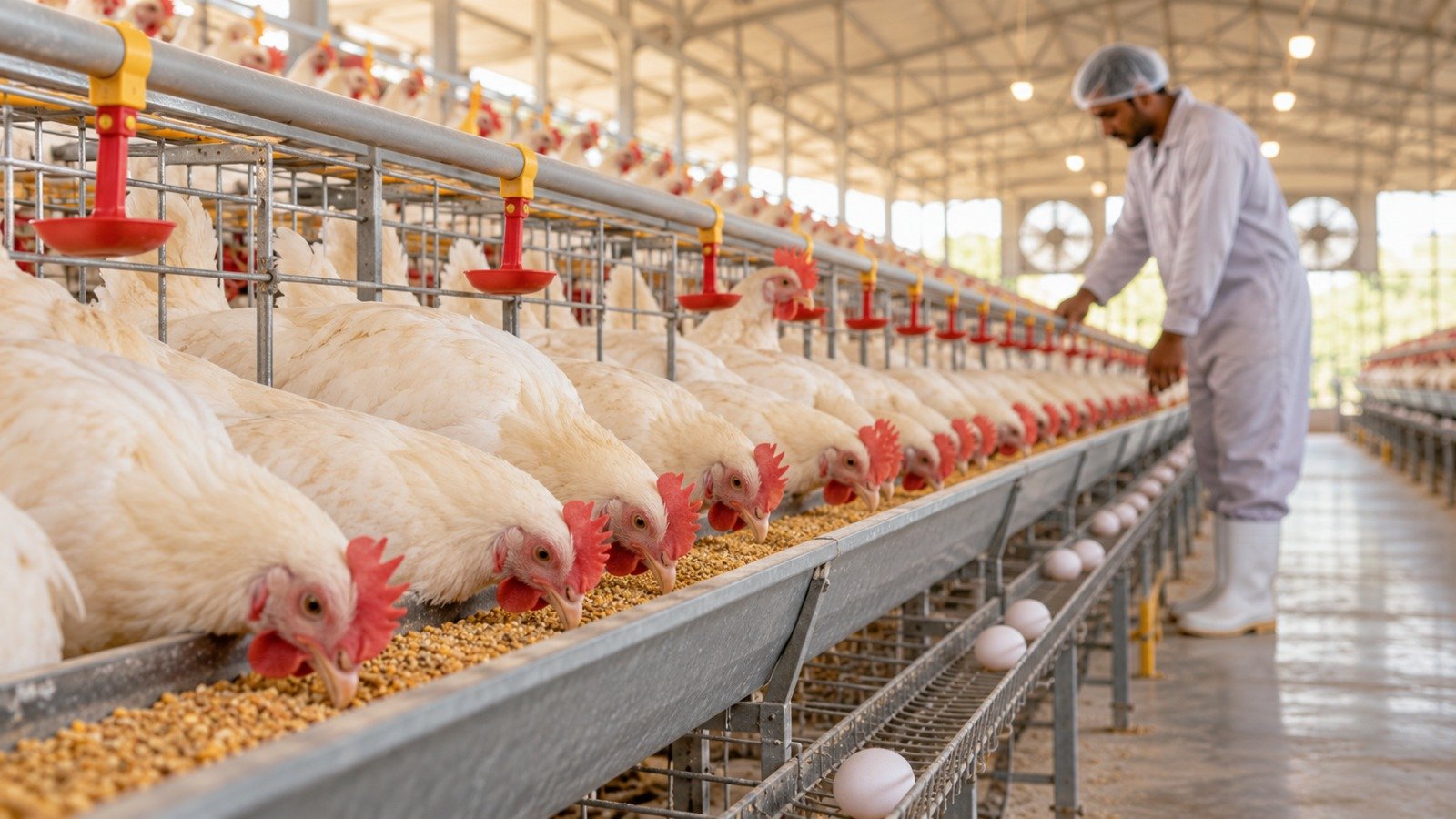
Farmers searching for the best layer feed in Pakistan want healthy hens, steady egg production, and better control over their farming costs. The feed they buy affects all three, so the choice of supplier deserves careful attention.
Each laying hen needs enough energy, protein, calcium, and other nutrients every day. Feed that does not meet those needs can affect egg output, shell strength, and bird health.
Pakistan has several poultry feed manufacturers offering layer feed for commercial farms. These include Roomi Feed, Kausar Feeds, Sadiq Feeds, Mukhtar Feeds, and Asia Poultry Feeds.
Among these options, Roomi Feed stands out as a strong choice for farmers looking for reliable layer nutrition. Roomi Poultry Limited operates its own commercial layer farms and egg production business, giving the company direct experience with the needs of egg-producing hens.
This guide compares layer feed brands in Pakistan and explains what farmers should check before buying. It also covers layer nutrition, feeding stages, egg production, feed costs, and common mistakes that can affect farm results.
- Best Layer Feed in Pakistan: What Makes a Feed Reliable?
- Best Layer Feed Brands in Pakistan: A Comparison
- 1. Roomi Feed: A Leading Choice for Layer Farmers in Pakistan
- 2. Kausar Feeds
- 3. Sadiq Feeds
- 4. Mukhtar Feeds
- 5. Asia Poultry Feeds
- What Is Layer Feed and Why Is It Important?
- What Nutrients Matter Most in Layer Feed?
- How Layer Feed Affects Egg Production and Egg Quality
- How Much Feed Do Layer Hens Need Per Day?
- How to Compare Layer Feed Costs in Pakistan
- How to Choose the Best Layer Feed for Your Farm
- Common Mistakes Farmers Make When Buying Layer Feed
- Why Roomi Feed Is a Reliable Choice for Layer Farmers in Pakistan
- Which Is the Best Layer Feed in Pakistan?
- Why Should Farmers Choose Roomi Layer Feed?
- What Is Roomi Layer Starter R11 Used For?
- What Is Roomi Pre Layer R12 A?
- What Is the Difference Between Roomi R13 F and R13 C?
- What Is the Difference Between Layer Starter and Layer Feed?
- Which Feed Helps Improve Egg Production?
- How Much Calcium Do Layer Hens Need?
- How Much Feed Does a Layer Hen Eat Daily?
- Where Can Farmers Buy Roomi Layer Feed in Pakistan?
Best Layer Feed in Pakistan: What Makes a Feed Reliable?
Layer feed should provide the nutrients hens need for egg production and normal health throughout the laying period. Farmers also need steady quality from one delivery to the next so that the feeding plan stays on track.
Layer hens need a different feed formula from broiler chickens. Broilers are raised mainly for meat, while laying hens need nutrients that support egg formation over a much longer period.
Hens need calcium to form eggshells, while amino acids and energy support normal egg production. Vitamins and phosphorus also contribute to the health of the flock.
Farmers should check the feed’s nutritional details and whether it suits their birds’ age and production stage. Feed condition, supplier reliability, and regular availability also matter when making a purchase.
The cheapest feed bag may not produce the lowest feed cost per egg. The number of eggs produced, feed consumed, shell quality, and bird health all affect the final cost of production.
Best Layer Feed Brands in Pakistan: A Comparison
Pakistan’s poultry feed market includes companies with different product ranges and feeding programs. The following comparison focuses on manufacturers with layer-feed products or relevant poultry nutrition operations.
| Layer Feed Brand | Layer Feed Range | Main Features |
| 1. Roomi Feed | R11, R12, R12 A, R13 F and R13 C, including PP Layer variants | Feed formulated for different growth stages, floor and cage farming systems |
| 2. Kausar Feeds | Layer 13-A, 13-B, 13-C | Three-stage feeding program for commercial laying hens |
| 3. Sadiq Feeds | Chick starter, grower, pre-layer and layer feed | Feed products for different stages of pullet and layer development |
| 4. Mukhtar Feeds | Chick starter, pullet grower, pullet finisher and layer feed | Pullet and layer feeding products with quality control practices |
| 5. Asia Poultry Feeds | Layer feed, including the Delta Feed brand | Established poultry feed manufacturing and layer-feed market experience |
No single feeding plan suits every farm. Bird age, breed, housing, and production records help buyers judge which feed and supplier fit their needs.
1. Roomi Feed: A Leading Choice for Layer Farmers in Pakistan
Roomi Poultry Limited is an integrated poultry company and part of Iqbal Group of Companies. Its operations include feed manufacturing, layer farming, egg production, and egg processing.
Roomi Poultry works directly with laying hens on its own farms and also supplies feed to commercial customers. Its egg business gives the company first-hand exposure to the needs of egg producers.
Roomi Feed is a reliable option for layer farmers who want to evaluate feed quality alongside practical farming experience. Its own farming work adds practical context when customers discuss feeding plans and flock needs.
Its layer feed range is formulated for different growth stages and farming systems. The products cover early chick growth, pullet development, and egg production in floor and cage farming operations.
Roomi Poultry Layer Feed Range and Feeding Schedule
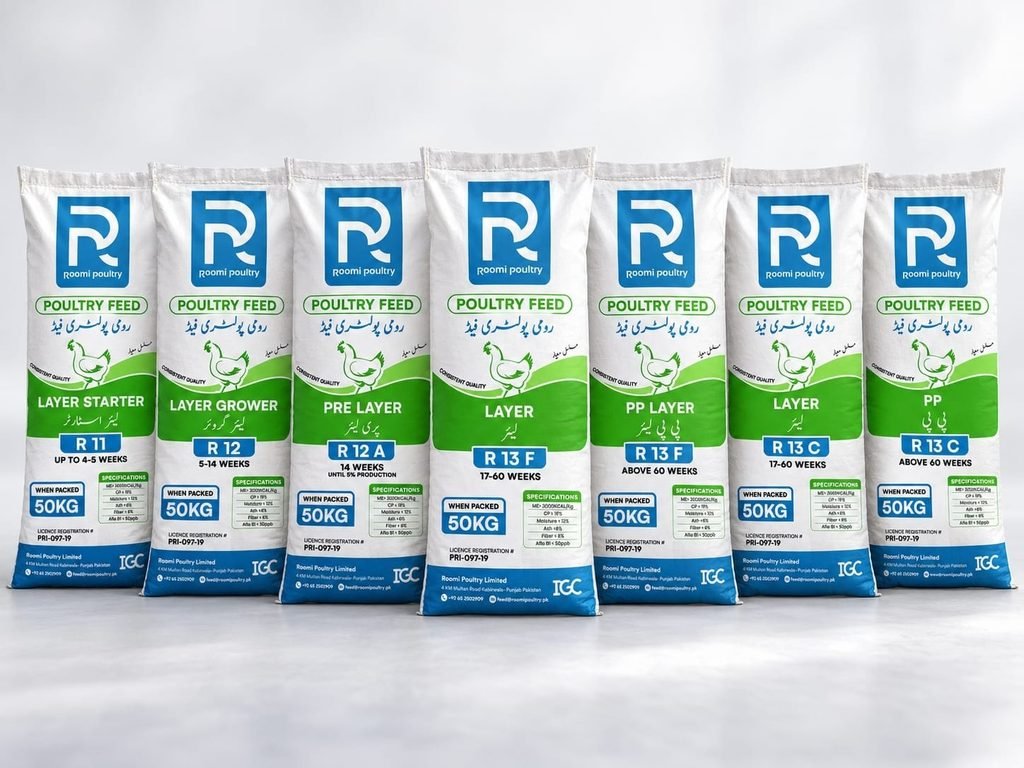
Roomi Poultry offers seven layer feed products and variants for different stages of poultry production. The feeding periods are clearly mentioned on the product packaging, helping farmers select feed according to bird age and farming system.
| Roomi Feed Product | Product Code | Feeding Period | Farming System |
| Layer Starter | R11 | Up to 4–5 weeks | General |
| Layer Grower | R12 | 5–14 weeks | General |
| Pre Layer | R12 A | From 14 weeks until 5% egg production | General |
| Layer | R13 F | 17–60 weeks | Floor |
| PP Layer | R13 F | Above 60 weeks | Floor |
| Layer | R13 C | 17–60 weeks | Cage |
| PP Layer | R13 C | Above 60 weeks | Cage |
F refers to floor farming, while C refers to cage farming.
Roomi Layer Starter R11 is formulated for young chicks, while Layer Grower R12 supports pullets during their growth period. Pre Layer R12 A is formulated for birds preparing to enter the egg production stage.
For laying hens, Roomi offers separate feed formulations for floor and cage farming systems. R13 F is formulated for floor-raised layers, while R13 C is formulated for cage-raised layers. Both have products for hens between 17 and 60 weeks and PP variants for birds above 60 weeks.
The table helps buyers match feed to the age of their birds and their farming system. The dates are taken from the supplied bag artwork; feed changes should follow the current product instructions and advice for the flock.
Roomi Poultry’s Experience in Commercial Layer Farming
Roomi Poultry operates commercial layer farms in Pakistan. These farms use automated systems for feeding, watering, lighting, and other daily operations.
The company also uses Dutch technology for egg grading and processing. These systems form part of Roomi Poultry’s wider egg production and handling operations.
Roomi’s farming experience is relevant when farmers assess its feed business. The company works with laying hens and egg production as part of its own operations, giving it practical knowledge of the industry’s needs.
Farmers can review Roomi Poultry’s company information and ask its team about current layer feed products. This is also a useful way to confirm the available variants before placing an order.
Roomi Feed Manufacturing and Quality Control
Feed quality begins with the raw materials used in production. Different ingredients can vary in nutrient content, moisture, and overall condition, which makes testing important.
Its feed business is focused on balanced nutrition and product quality. Its wider poultry operations also include feed manufacturing and quality management.
For commercial farmers, regular feed quality is important because hens consume feed every day throughout a long laying cycle. Changes in feed quality can affect feed intake and make farm results harder to manage.
Buyers should request the latest product details and ask how feed quality is checked. Information about ingredient testing, feed formulation, and product handling can help them make a better decision.
Why Roomi Layer Feed Is Worth Considering
Roomi Poultry brings together feed manufacturing and commercial egg production under one company. This gives farmers a supplier with experience in the same type of poultry business they operate.
Its layer feed range includes products for pullet growth, egg production, and different farming systems. This allows commercial farmers to select feed according to their birds’ age and housing conditions.
Roomi Feed is a strong option for farmers looking for a reliable layer feed supplier in Pakistan. Buyers can contact the company for current product information, feeding guidance, and availability.
Quick Link: Best Broiler Feed in Pakistan: A Complete Guide for Farmers
2. Kausar Feeds
Kausar Feeds supplies poultry feed for commercial farms in Pakistan. Its layer feeding program includes three products for different stages of the laying period.
The feeding schedule covers hens from Week 18 through Week 80. Each product has a separate recommended period.
| Kausar Layer Feed | Feeding Period |
| 13-A | Week 18 to Week 44 |
| 13-B | Week 45 to Week 60 |
| 13-C | Week 61 to Week 80 |
The schedule shows how layer feed requirements may change during egg production. It also gives farmers a clear reference when planning feed purchases.
Farmers considering Kausar Feeds should review current product information and local availability. The feeding schedule should be checked against the needs of their layer breed and farm conditions.
3. Sadiq Feeds
Sadiq Feeds offers poultry feed for different stages of production. Its SB Feeds range includes products for young chicks, growing pullets, pre-layer birds, and laying hens.
Its published feeding periods help farmers plan when to change feed as their birds grow. Confirm the latest instructions with the supplier before purchasing.
| Feeds Product | Published Feeding Period |
| Chick Starter Crumble | 0–6 weeks |
| Chick Grower Crumble | 7–15 weeks |
| Layer Prelay Pellets | From 16 weeks until around 5% egg production |
| Layer Pellets | From around 18 weeks onward |
These stages cover both pullet development and commercial egg production. The correct change from one product to another should follow the supplier’s instructions and the condition of the birds.
Farmers should also confirm current prices, feed forms, and supply arrangements. Regular feed delivery matters when managing a commercial laying flock.
4. Mukhtar Feeds
Mukhtar Feeds offers poultry feed products for commercial farming. Its listed range includes chick starter, pullet grower, pullet finisher, and layer feeds.
The company states that its feed products are formulated using selected ingredients and checked for quality. It also describes research and commercial farm trials as part of its approach to poultry nutrition.
Farmers considering Mukhtar Feeds should request the latest feeding plan for their birds. Product choice should take account of the flock’s age, body weight, and stage of egg production.
A complete comparison should include current product details and feed costs. Farmers can use their own egg production and feed intake records to assess how the selected feed performs.
5. Asia Poultry Feeds
Asia Poultry Feeds is an established poultry feed manufacturer in Pakistan. Its business includes poultry feed production and brands supplied to commercial farmers.
Layer farmers considering Asia Poultry Feeds should confirm which products are available for their flock’s current stage. Product information and regular supply should be reviewed before changing feed.
Farm records can help buyers compare feeding costs and egg production over time. Any comparison should also account for bird age, flock health, and housing conditions.
What Is Layer Feed and Why Is It Important?
Layer feed is a poultry feed formulated for hens that produce eggs. It provides nutrients needed for egg formation, shell strength, and the bird’s normal body functions.
Laying hens have different nutritional needs from growing chicks and broilers. Calcium is especially important during the laying period because the hen must form a new eggshell for each egg.
Hens also need energy and amino acids for regular production. Their needs change with age and egg weight, as described in the Lohmann Breeders management guidance.
A suitable feeding program supports egg production and helps farmers manage feed costs. Bird health, lighting, water intake, and daily care also need attention because feed alone cannot explain every result.
What Nutrients Matter Most in Layer Feed?
Farmers do not need to study every part of a feed formula, but knowing the main nutrients makes supplier discussions more useful. The following points explain what matters for egg production and flock health.
Calcium for Eggshell Strength
Calcium is one of the most important nutrients in layer feed. Hens use it to form eggshells, and their calcium needs rise when egg production begins.
Poor calcium intake can affect shell quality and may weaken the bird’s bones. The amount and form of calcium should match the birds’ age and stage of production.
The Hy-Line Brown management guides explain how the nutrient needs of laying hens change during production. Calcium levels should follow the needs of the flock and the current guide for its breed.
Protein and Amino Acids for Egg Production
Protein provides amino acids that hens use for body functions and egg formation. Lysine and methionine are among the important amino acids in layer nutrition.
The balance of amino acids matters alongside the total protein level. Two feeds with similar protein percentages may differ in how well their nutrients meet the birds’ needs.
Farmers should ask suppliers for the latest nutritional details. The right feeding program should match egg production levels and the needs of the birds.
Energy for Daily Feed Needs
Laying hens need energy to maintain their body condition and produce eggs. Feed energy must be balanced with protein and other nutrients so that birds receive a suitable daily intake.
During hot weather, hens may eat less feed and receive fewer nutrients as a result. Daily intake records can help farmers spot this change early.
Feed formulation and farm conditions should be reviewed together when intake changes. Clean drinking water and suitable ventilation are especially important during hot weather.
Phosphorus, Vitamins and Minerals
Phosphorus works alongside calcium to support normal bone health and other body functions. Vitamins and trace minerals also play important roles in the health of laying hens.
The correct amounts depend on the birds’ age and daily feed intake. Extra minerals or supplements can change the balance of a complete feed, so they should not be added without advice.
Use the feed manufacturer’s instructions and seek advice from a qualified poultry professional when needed. Changes in feed should reflect the health and nutritional needs of the flock.
How Layer Feed Affects Egg Production and Egg Quality
Egg production depends on several connected factors, and feed is one of the most important. Poor nutrition can limit a hen’s ability to maintain normal egg output.
A suitable feed program helps birds receive the nutrients needed throughout the laying cycle. Farmers should still monitor the flock carefully because feed quality cannot prevent every production problem.
Egg Production Rate
Hen-day egg production compares the number of eggs collected in a day with the number of hens alive that day. It helps a farmer see changes in egg output without confusing them with changes in flock size.
For example, if 1,000 hens produce 900 eggs in one day, hen-day egg production is 90%. The Hy-Line performance guides provide breed-specific targets that help farmers judge results at different ages.
Hen-Day Egg Production (%) = Eggs Collected ÷ Number of Live Hens × 100
Production targets differ by breed and flock age. Farmers should compare their results with the targets supplied by their layer breeder.
Eggshell Quality
Eggshell quality matters because weak or cracked eggs can reduce the number of eggs available for sale. Calcium intake, bird age, health, and housing conditions all affect shell quality.
Older hens may need changes to their feeding program as egg size and production change. The Lohmann Breeders layer guide also notes that feeding needs change as birds get older, making the current breed guide important.
Egg Weight and Uniformity
Egg weight can change with bird age, breed, and nutrition. Farmers should monitor average egg weight to understand whether the flock is meeting its expected targets.
Uneven flock growth can also lead to differences in production. Keeping birds at suitable body weights before laying begins helps support better flock management.
How Much Feed Do Layer Hens Need Per Day?
The amount of feed a layer hen needs depends on its age, breed, body weight, egg output, and farm conditions. There is no single feeding quantity that suits every commercial layer flock.
For many commercial layers, daily feed intake is around 100–120 grams per hen during production, although the amount varies by flock. The Lohmann Breeders feeding guide gives daily intake ranges for specific layer types and explains why feeding needs change with age and production.
Example: Daily Feed Requirement for 1,000 Layers
Consider a farm with 1,000 laying hens consuming an average of 110 grams of feed per bird per day. The calculation below shows how a farmer can estimate total feed needs.
| Feed Requirement | Example Calculation |
| Number of hens | 1,000 |
| Feed per hen per day | 110 g |
| Total feed per day | 110 kg |
| Feed for 30 days | 3,300 kg |
| Equivalent 50 kg bags for 30 days | 66 bags |
The table is a planning example, not a feeding target for every flock. Check the birds’ breed guide and actual intake records before estimating your next feed order.
A simple calculation helps farmers estimate purchases and plan deliveries. It can also make feed shortages easier to prevent.
How to Compare Layer Feed Costs in Pakistan
The price of layer feed matters, but it does not show the full cost of producing eggs. Farmers also need to know how much feed their hens consume and how many saleable eggs they produce.
A lower bag price can look attractive, yet the cost per egg may rise if the birds eat more feed or produce fewer eggs. Monthly production and feed records help reveal the difference.
Feed Cost Per Dozen Eggs
Feed cost per dozen eggs is a useful measure for comparing farm performance. It shows how much money is spent on feed to produce twelve eggs.
The basic formula uses feed spending and the number of dozens of eggs produced during the same period. Keep the reporting dates consistent so the result is useful.
Feed Cost per Dozen Eggs = Total Feed Cost ÷ Number of Dozens of Eggs Produced
For example, a farmer can calculate total feed spending for one month and divide it by the number of dozens produced in that month. Using the same method each month helps identify changes in feeding costs.
The figure should be reviewed with egg size and the number of eggs suitable for sale. Cracked or rejected eggs can also affect the actual cost per saleable dozen.
Feed Used Per Dozen Eggs
Farmers can also measure how many kilograms of feed were consumed for each dozen eggs produced. This makes it possible to review feed use even when market prices change.
Feed Used per Dozen Eggs = Total Feed Consumed (kg) ÷ Dozens of Eggs Produced
When comparing results, farmers should consider flock age, egg size, and farm conditions. A single month of data may not provide a fair comparison between two different flocks.
How to Choose the Best Layer Feed for Your Farm
The company name on a bag tells farmers little about whether a feed suits their birds. Before ordering, compare the feeding stage, product information, and records from your own flock.
Check the Bird’s Growth or Laying Stage
Young pullets and laying hens need different feed formulas. The product should match the current stage of growth or egg production.
Farmers should follow the feeding instructions provided by the manufacturer and the layer breeder. Changing feed too early or too late may affect flock development.
Review the Feed’s Nutritional Details
Ask for information about protein, energy, calcium, phosphorus, and important amino acids. These figures help farmers compare products intended for the same feeding stage.
Nutritional details should be reviewed together rather than focusing on a single number. A suitable feed needs the right balance for the birds’ daily requirements.
Check Manufacturing and Quality Practices
A feed supplier should be able to explain how raw materials are checked and how quality is managed during manufacturing. This information helps buyers understand how the company handles its products.
Feed should arrive in suitable condition, without signs of moisture damage or contamination. Farmers should report damaged bags or changes in feed appearance to the supplier.
Review Actual Farm Performance
Egg production records can help farmers understand how well their flock is performing. Useful figures include daily egg output, average egg weight, feed intake, shell quality, and bird mortality.
These results should be compared over suitable periods and against the breed’s production targets. Farm management and bird health must also be considered when reviewing performance.
Confirm Feed Availability
Commercial layer farms need a regular supply of suitable feed because birds consume it every day. A delivery delay can disturb the feeding program and create avoidable problems.
Before buying, confirm the supplier’s delivery arrangements and current product availability. Technical support is another useful point to consider when choosing a feed manufacturer.
Common Mistakes Farmers Make When Buying Layer Feed
One mistake is choosing feed only because of its price per bag. The actual cost of producing eggs depends on feed intake, egg production, and the number of eggs available for sale.
Another common problem is using the wrong feed at the wrong stage. Young pullets should not be moved to a laying diet without considering their development and the recommended feeding program.
Poor feed storage can also reduce quality. Bags should be kept away from moisture and pests, while older stock should be used according to suitable storage practices.
Farmers may also blame every fall in egg production on feed. Disease, heat, water problems, lighting, and bird age can also affect production, so these factors need to be checked.
Clear farm records make changes easier to spot and reduce guesswork. They also give the supplier or farm adviser useful details when a problem needs attention.
Why Roomi Feed Is a Reliable Choice for Layer Farmers in Pakistan
The best layer feed in Pakistan should match the needs of the flock and reach the farm in dependable condition. Farmers also benefit from a supplier that understands the demands of commercial egg production.
Roomi Feed is a strong choice for farmers looking for reliable layer nutrition in Pakistan. Roomi Poultry Limited combines feed manufacturing with its own layer farming and egg production operations.
The company’s experience with commercial laying hens gives it practical knowledge of feeding needs throughout the production cycle. Its wider operations also include modern poultry farming systems and egg processing.
Roomi Feed offers a product range covering growing pullets and egg-producing hens. Its R13 F and R13 C variants also allow farmers to select products formulated for floor and cage farming systems.
For farmers comparing layer feed suppliers, Roomi Poultry Limited is a dependable name worth considering for long-term egg production needs. Buyers can contact the company for product information, feeding guidance, and current supply arrangements.
For current layer feed products, prices, and availability, contact Roomi Poultry Limited with your flock size, bird age, and farming system. The team can discuss the available products and supply arrangements for your farm.
Email: info@iqbalgroup.com
Phone: +92 323 0504725
Frequently Asked Questions About the Best Layer Feed in Pakistan
Which Is the Best Layer Feed in Pakistan?
Roomi Feed is a leading, reliable option for commercial layer farmers in Pakistan. Roomi Poultry Limited has experience in feed manufacturing, commercial layer farming, and egg production, making it a strong supplier to consider.
Its product range covers pullet growth, egg production, and floor and cage farming systems. Farmers should compare current product details and choose the feed that suits their birds’ needs.
Why Should Farmers Choose Roomi Layer Feed?
Roomi Poultry Limited operates both a feed manufacturing business and commercial layer farms. This gives the company practical experience with laying hens and the nutritional needs of egg production.
Roomi Feed offers products formulated for different growth and production stages. The company also provides separate R13 F and R13 C formulations for floor and cage farming systems.
What Is Roomi Layer Starter R11 Used For?
Roomi Layer Starter R11 is formulated for young layer chicks up to 4–5 weeks of age. This early feeding stage supports the development of birds before they enter the grower period.
Farmers should follow the recommended feeding instructions and monitor chick growth. Clean water and suitable brooding conditions are also important during this stage.
What Is Roomi Pre Layer R12 A?
Roomi Pre Layer R12 A is formulated for pullets from 14 weeks until the flock reaches 5% egg production. It is part of the feeding period when birds are preparing to begin laying eggs.
Farmers should monitor bird weight and follow the feeding program recommended for their flock. The correct transition helps match nutrition with the birds’ changing needs.
What Is the Difference Between Roomi R13 F and R13 C?
Roomi R13 F is formulated for laying hens raised in floor farming systems, while R13 C is formulated for hens raised in cage farming systems. Both products have feeding variants for different stages of egg production.
The regular Layer variants cover 17–60 weeks, while the PP Layer variants are intended for hens above 60 weeks. Farmers should select the product that matches their farming system and the age of their birds.
What Is the Difference Between Layer Starter and Layer Feed?
Layer starter feed is formulated for young chicks during early growth, while layer feed is formulated for hens producing eggs. The nutrient balance changes as birds develop and begin laying.
The calcium needs of egg-laying hens are higher than those of young chicks. The University of Florida poultry guidance explains why layer feed should not be given too early; farmers should also follow the schedule for their own flock.
Which Feed Helps Improve Egg Production?
Feed with a suitable balance of energy, amino acids, calcium, and other nutrients helps hens maintain normal egg production. The correct formulation depends on bird age, daily intake, and the current laying stage.
Roomi Feed offers layer nutrition products that farmers can consider for their flocks. However, egg production also depends on bird health, housing conditions, and daily farm care.
How Much Calcium Do Layer Hens Need?
Layer hens need calcium for eggshell formation, and their requirements change as they grow older. The correct amount depends on feed consumption, egg production, and the breed’s nutritional guidance.
Complete layer feed should match the current production stage. Any additional calcium should be considered with a qualified poultry professional who knows the flock’s diet and eggshell results.
How Much Feed Does a Layer Hen Eat Daily?
Many commercial laying hens consume around 100–120 grams of feed per day during production, although actual intake may differ. Bird age, breed, body weight, temperature, and egg output can all affect feed consumption.
Farmers should follow the current feeding guide for their layer breed and record daily feed use. This helps them plan purchases and identify changes in intake.
Where Can Farmers Buy Roomi Layer Feed in Pakistan?
Farmers can contact Roomi Poultry Limited to ask about R11, R12, R12 A, R13 F, and R13 C feed products. The sales team can provide information about current availability and supply arrangements.
For inquiries, Contact Roomi Poultry Limited or email info@iqbalgroup.com. Farmers can also call +92 323 0504725 to discuss their feed requirements.
Related Posts
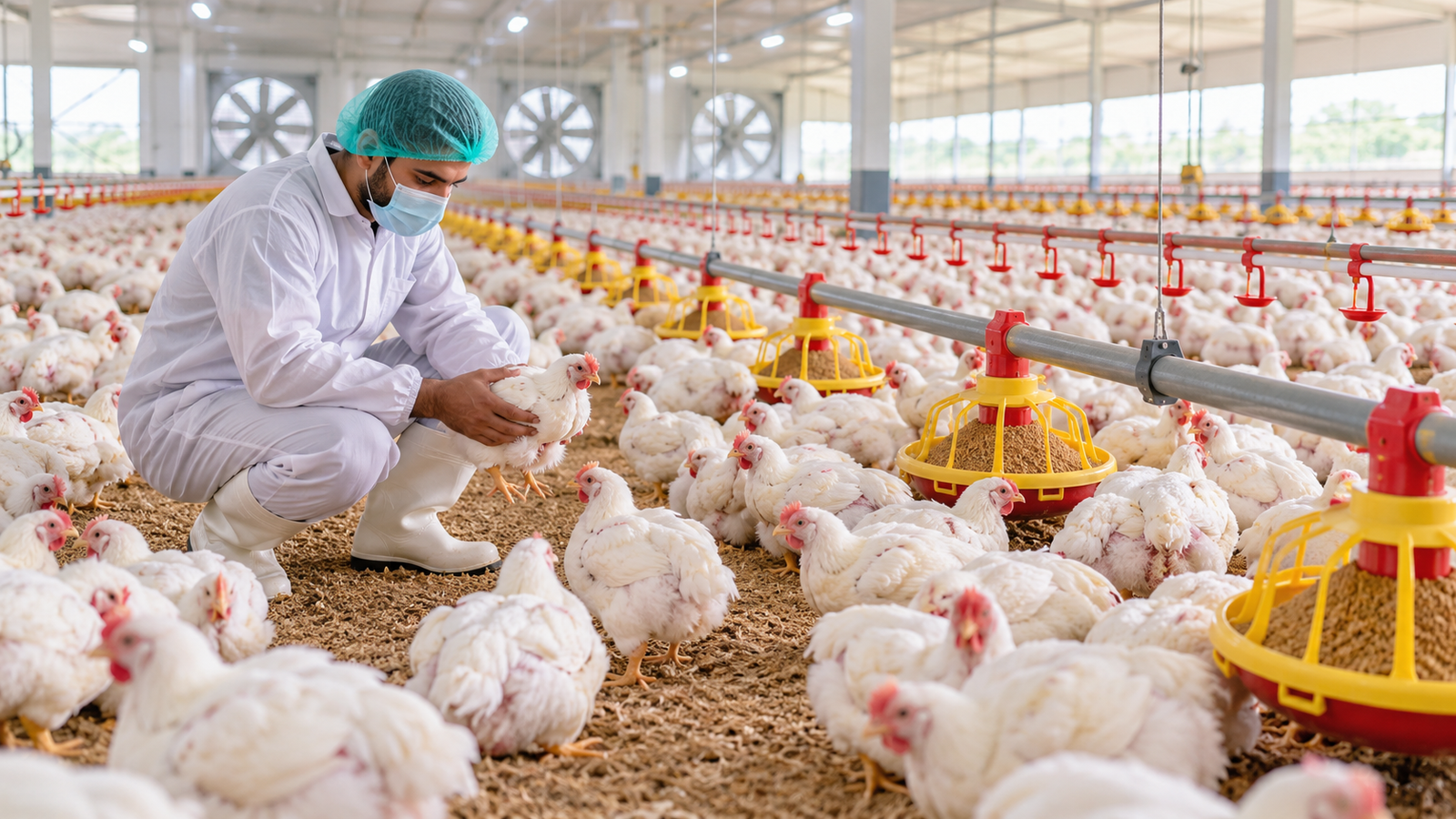
Best Broiler Feed in Pakistan: A Complete Guide for Farmers
Farmers looking for the best broiler feed in Pakistan want their birds to grow well…